

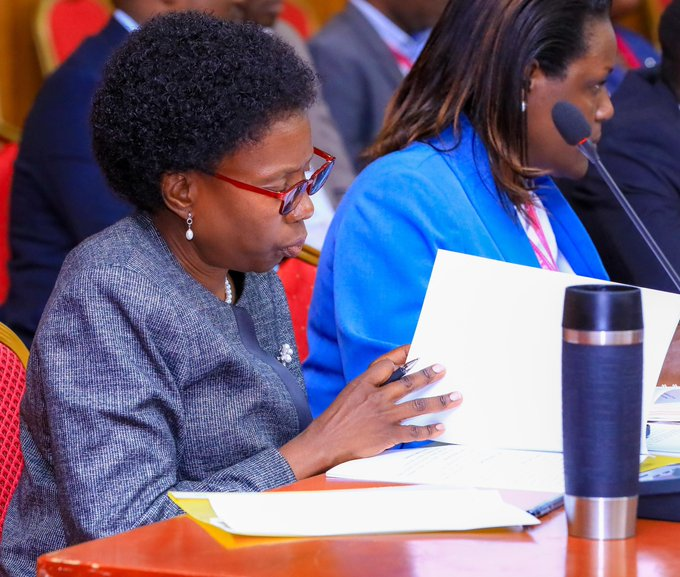
KAMPALA — Uganda’s Minister of Health, Jane Ruth Aceng, has defended a new government policy requiring medical students to complete a mandatory internship before they can graduate as fully qualified doctors, arguing the move is necessary to protect patient safety and improve professional standards.
Appearing before Parliament’s Health Committee during scrutiny of the 2026/27 Ministerial Policy Statement, Aceng said the revised training structure extends medical education to six years, integrating internship into the academic programme rather than treating it as a post-graduation requirement.
Previously, students pursuing the Bachelor of Medicine and Bachelor of Surgery (MBChB) degree would graduate after five years of study and then undertake a separate one-year internship. Under the new system, students will only graduate after successfully completing the internship component.
“This policy is intended to safeguard the health of Ugandans,” Aceng told the committee, noting that some graduates had repeatedly failed internship despite already holding medical degrees. “We cannot allow someone to qualify as a doctor without demonstrating competence in practical settings.”
The policy shift comes amid a sharp rise in the number of medical interns, which has grown from about 200 annually to between 1,500 and 2,000, following an increase in training institutions to more than 30 across the country.
However, the changes have sparked concern among medical trainees, particularly over welfare and facilitation. The Federation of Uganda Medical Interns (FUMI) has raised complaints about delayed or unpaid allowances since August 2025, arguing that the growing number of interns has strained available resources.
Interns and some stakeholders have also questioned the implications of the new policy, including who bears responsibility in cases of medical errors committed by students who have not yet formally graduated.
Public reaction has been mixed. Supporters say the reform will improve the quality of healthcare by ensuring that only competent practitioners enter the system, while critics warn it could create room for exploitation through extended periods of unpaid or underpaid labour.
Members of Parliament acknowledged the concerns and called for government to address intern welfare alongside implementing the policy, emphasizing that training reforms must be matched with adequate funding and supervision.
The Health Ministry maintains that the changes are part of broader efforts to strengthen Uganda’s healthcare system, even as debate continues over how best to balance training quality, student welfare, and service delivery.