
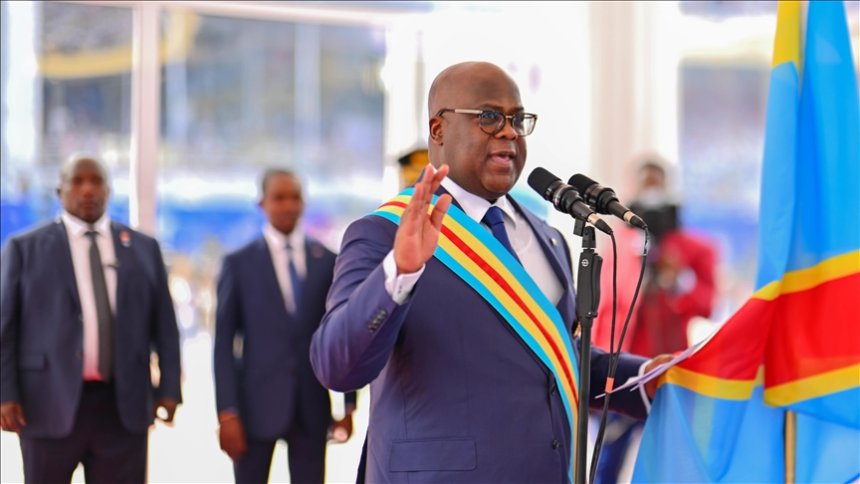
The President of the Democratic Republic of the Congo, Félix Tshisekedi, has sparked political debate after suggesting he would accept a third term in office if supported by the Congolese people.
Speaking at a press conference in Kinshasa, Tshisekedi emphasised that he has not personally requested an extension of his mandate beyond constitutional limits but would respect the will of the electorate.
“I have not asked for a third term, but I’m telling you – if the people want me to have a third term, I will accept,” he said.
His remarks come despite the fact that the DRC Constitution limits a president to a maximum of two terms in office.
According to reports, Tshisekedi also stressed that any constitutional change would only proceed through public consultation, potentially via a referendum.
“For me, if there is to be any change, revision, or whatever needs to be done, it will never be without consulting the population, the Congolese people—that is to say, through a referendum,” he added.
The comments have already drawn attention from political observers and opposition figures, who argue that discussions around a third term risk destabilising the country’s constitutional order.
Analysts note that the president’s statement comes at a sensitive political moment, with growing debate over governance reforms and future elections in the resource-rich central African nation.
Opposition groups have previously accused the government of testing public reaction to potential constitutional changes, though the presidency maintains that no formal proposal to extend term limits has been made.
The DRC remains under a two-term presidential limit established under its current constitutional framework, which was designed to ensure democratic rotation of power.
For now, Tshisekedi’s remarks have intensified national debate over constitutional interpretation, political succession, and the future of leadership in the country.