

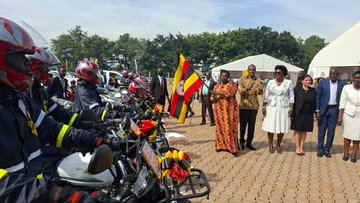
KAMPALA – Uganda has taken a significant step toward strengthening agricultural service delivery, with Vice President Jessica Alupo flagging off a fleet of vehicles and motorcycles to support extension work across the country.
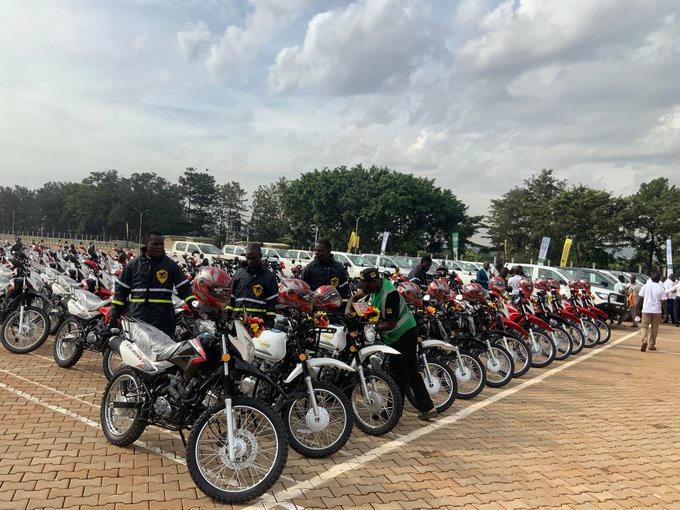
The distribution, carried out at the Kololo Independence Grounds, saw 69 double-cabin pickup trucks and 1,034 motorcycles handed over to district local governments under the Uganda Climate Smart Agricultural Transformation Project.
Boosting Extension Services
The initiative, implemented by the Ministry of Agriculture, Animal Industry and Fisheries with support from the World Bank, is aimed at improving mobility for agricultural extension workers, particularly in hard-to-reach rural areas.
Officials said the new fleet will enhance farmer outreach, monitoring, and advisory services in 69 project districts, ultimately contributing to increased productivity and climate-resilient farming.
Agriculture Minister Frank Tumwebaze emphasised that equipping extension workers with reliable transport is central to government policy.
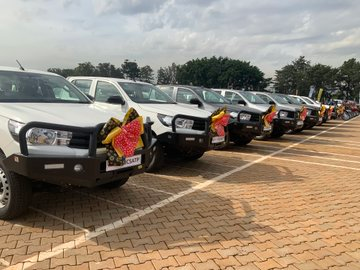
“It is our objective to ensure that all extension workers have adequate means of transport to effectively carry out farm outreach services,” he said.
Call for Accountability
Tumwebaze urged local leaders, including Members of Parliament, district chairpersons, and Resident District Commissioners, to ensure that the vehicles and motorcycles are properly utilized.
“These tools must be put to good use to benefit farmers and improve service delivery,” he said.
Permanent Secretary Hellen Adoa also attended the handover, underscoring the ministry’s commitment to strengthening agricultural systems.
Backed by Global Support
The Uganda Climate Smart Agricultural Transformation Project is part of broader efforts to modernize the sector and build resilience against climate change. The World Bank’s support has been instrumental in financing key interventions, including transport, technology, and farmer support systems.
Mixed Public Reaction
While the initiative has been welcomed as a boost to agricultural productivity, some voices on social media questioned the reliance on imported vehicles and called for more sustainable, locally driven solutions.
Driving Rural Transformation
Government officials maintain that improving extension services is critical to transforming Uganda’s largely agrarian economy. With better mobility, extension workers are expected to reach more farmers, provide timely guidance, and support the adoption of modern farming practices.
The deployment marks one of the largest logistical boosts to Uganda’s agricultural extension system in recent years.