

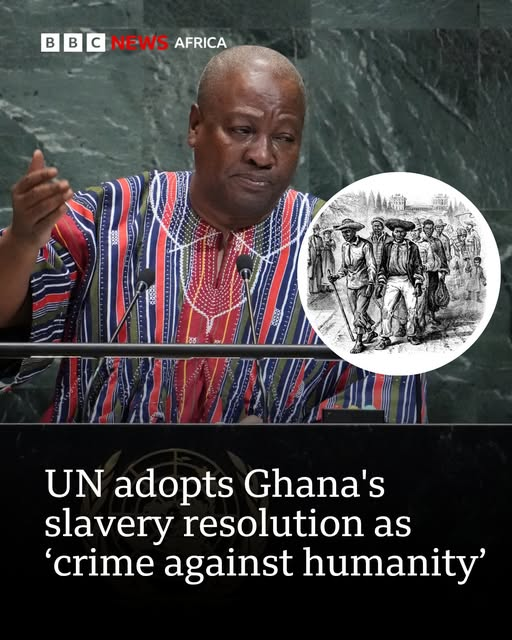
New York, USA — The United Nations General Assembly has passed a landmark resolution recognising the transatlantic slave trade as “the gravest crime against humanity”, a move hailed by human rights advocates as a step toward historical accountability and potential reparations.
The resolution, proposed by Ghana, encourages UN member states to acknowledge the harms of the slave trade, consider issuing formal apologies, and contribute to a reparations fund—though the text does not specify financial amounts.
Voting Results
The resolution was adopted with 123 countries voting in favour, while three nations—the United States, Israel, and Argentina—voted against.
A total of 52 countries abstained, including the United Kingdom and several European Union member states.
According to BBC News, countries like the UK have consistently resisted calls for reparations, arguing that contemporary institutions cannot be held legally responsible for historical injustices.
Global Reactions
Human rights groups welcomed the vote as a symbolic but important step toward acknowledging centuries of suffering caused by the slave trade.
“This recognition is critical for healing and justice,” said a spokesperson for Amnesty International. “It lays the groundwork for nations to confront historical wrongs and engage in meaningful reparative measures.”
Advocates hope the resolution will spark renewed dialogue on reparations, education, and memorialisation initiatives that honour the victims of slavery worldwide.
Next Steps
While the resolution is non-binding, it represents a significant moral and political statement from the international community.
The UN urges member states to take steps toward apology and reparations, setting a framework for potential financial contributions and other restorative measures.
“The adoption of this resolution signals a collective acknowledgment of the immense human suffering caused by the slave trade,” Ghana’s UN ambassador said in a statement, according to Al Jazeera. “It is a call to action for all nations to confront the legacies of this crime.”
The decision adds momentum to ongoing debates over historical justice, the legacies of colonialism, and how nations can reconcile with the past while promoting human rights and equity in the present.