

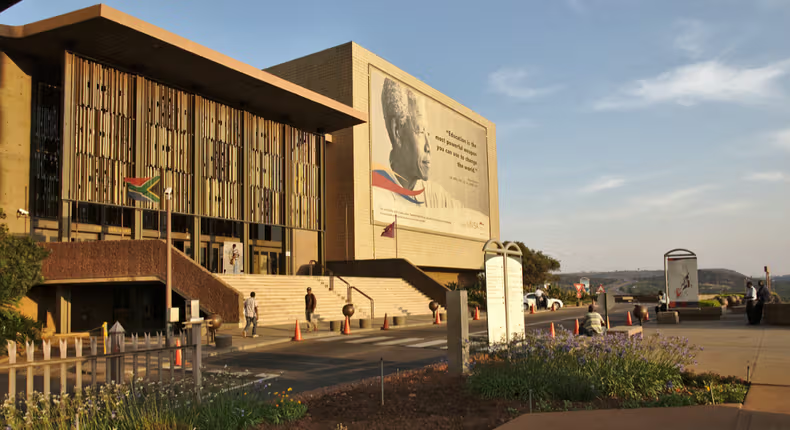
PRETORIA — The University of South Africa (UNISA) has made history as the first university on the African continent to own an airport, in a move aimed at transforming practical training in aviation and advanced technology fields.
The 20-hectare facility, located in South Africa, is expected to serve as a hands-on training hub for students pursuing aviation, drone technology, engineering, and other emerging technical disciplines.
UNISA Vice-Chancellor Puleng LenkaBula confirmed the acquisition, describing it as a strategic investment designed to bridge the gap between academic learning and real-world skills.
“This is a strategic investment to strengthen real-world training for students,” she said, adding that the airport will act as a “launchpad for future innovators,” enabling the institution to expand beyond its traditional distance-learning model.
The development marks a significant shift for University of South Africa, which is widely regarded as the continent’s largest university with more than 400,000 students globally.
According to the university, the airport will support specialised programmes in aviation operations, drone systems, and advanced digital technologies—fields seen as critical to Africa’s industrial and technological transformation.

Associate Professor Boitumelo Senokoane said the facility will give students a rare opportunity to translate theory into practice.
“This 20-hectare airport will give our students a unique opportunity to apply their studies in practice and gain skills that are in high demand in the aviation and engineering industries,” she said.
The acquisition aligns with UNISA’s broader academic and research expansion in areas such as digitalisation, biotechnology, renewable energy, and space science, positioning the institution as a growing hub of innovation on the continent.
Founded in 1873, UNISA continues to evolve its distance-learning model into a more blended system that incorporates practical training, in line with global trends in higher education.
The airport initiative is expected to strengthen the university’s role in producing job-ready graduates while supporting Africa’s growing demand for skilled professionals in high-tech industries.