

Uganda, co-hosting AFCON 2027 with Kenya and Tanzania under the Pamoja bid, faces venue readiness issues highlighted in a February CAF report Uganda itself requested.
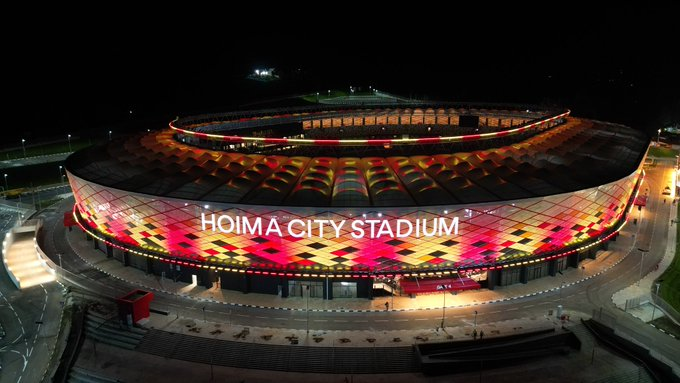
New Hoima City Stadium lacks spectator segregation, proper dressing rooms, and media facilities, while Mandela National Stadium’s upgrades lag behind schedule.
State Minister Peter Ogwang confirmed the gaps but pledged fixes with extra funding, aiming for progress by CAF’s August check—amid similar shortfalls in Kenyan and Tanzanian sites.
The assessment, conducted in February 2026 across Uganda, Kenya, and Tanzania under the joint “East Africa Pamoja” bid, found that none of Uganda’s proposed stadiums currently meet the required Category 4 international standards.
Among the facilities inspected were Mandela National Stadium and Hoima City Stadium, both central to Uganda’s hosting plans.
According to the report, Hoima City Stadium—recently commissioned—still faces operational deficiencies, including poor spectator segregation, obstructed views from team benches, and non-compliant media facilities.
Meanwhile, Mandela National Stadium, commonly known as Namboole, is undergoing its second phase of renovations, with CAF calling for major upgrades such as partial demolition of the West Stand and a complete roof replacement.
The continental body has directed that at least 50 percent of these works be completed by August 2026.
In Lira, the Akii-Bua Stadium project is nearing completion, with construction estimated at about 95 percent, though key installations such as floodlighting and specialised pitch systems remain outstanding.
Responding to the report, State Minister for Sports Peter Ogwang confirmed that government had proactively invited CAF to assess the facilities as part of quality assurance efforts.
“I would like to confirm that last month, we requested CAF to come and conduct an assessment of the state of our sports facilities—Mandela Stadium and Hoima Stadium—as part of the quality control and assurance measures ahead of AFCON 2027,” Ogwang said.
He acknowledged that CAF had identified gaps, particularly at Hoima Stadium, but said these had already been addressed with the contractor.
“It is true that CAF, in their report, cited a few gaps, specifically on Hoima Stadium, and such gaps have been brought to the attention of the contractor—SUMMA. Indeed, the contractor has since held several meetings with us and has hands on deck to ensure that the issues raised are addressed in due course to the satisfaction of CAF requirements and standards before the next inspection in August this year,” he said.
Ogwang emphasised that the current phase is part of a standard correction process and dismissed concerns about Uganda’s readiness.
“I am the authority; if the report is to come out, it is coming to me. That stadium [Hoima] met European standards. It was given a five-star rating, which is the best on the African continent,” he said.
Beyond stadium infrastructure, CAF also raised concerns about supporting facilities, including airport readiness, hotel capacity, and road connectivity—areas considered critical for hosting international teams and fans.
Ogwang noted that these aspects fall outside the direct mandate of the sports sector but are being handled at the highest level of government.
“On other infrastructural gaps, such as airport, roads and hotels, which are outside the ambit of the Education and Sports sector, the Minister of Education and Sports, Hon Janet Museveni, who is the Chairperson of the Inter-Ministerial Committee for AFCON, submitted a cabinet paper where government agreed to provide additional resources to address such challenges,” he said.
He reassured the public of Uganda’s commitment to delivering a successful tournament alongside its regional partners.
“I want to reassure the public that the Government of Uganda, together with Kenya and Tanzania under the ‘East Africa Pamoja’ bid, is fully committed to ensuring that the AFCON 2027 campaign is a success,” Ogwang added.
CAF is expected to conduct a follow-up inspection in August 2026, which will be critical in determining whether the host nations are on track to meet the required standards.
With timelines tightening, Uganda faces mounting pressure to address both stadium and supporting infrastructure gaps to secure its place as a viable host for Africa’s biggest football tournament.