

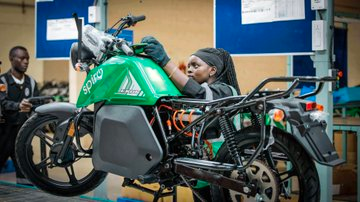
Uganda is accelerating efforts to build local manufacturing capacity through partnerships that support the assembly of electric motorcycles and value addition within the country’s priority export clusters.
According to Odrek Rwabwogo, chairman of the Presidential Advisory Committee on Exports and Industrial Development, the initiative is part of a strategy to strengthen Uganda’s industrial base while reducing reliance on imports.
Rwabwogo said that since early 2023, the committee has been working with electric mobility companies Arise and Spiro to promote the assembly and manufacturing of electric bikes in Uganda, alongside value addition in key agricultural export clusters.
“From early 2023, PACEID worked with the Arise and Spiro electric bike entities. This is to drive assembly, manufacturing and agrivalue addition on some of the export products under our 13 clusters that we began with,” Rwabwogo said in a statement shared online.
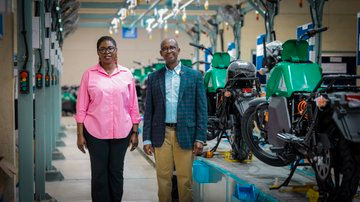
He acknowledged that encouraging industrial growth sometimes requires difficult fiscal decisions, including offering tax incentives to emerging manufacturers.
“It often feels like a painful compromise to cut taxes we so badly need now in order to get long-term manufacturing and assembly capabilities the country will surely need tomorrow to guarantee the future stability of Uganda,” he said.
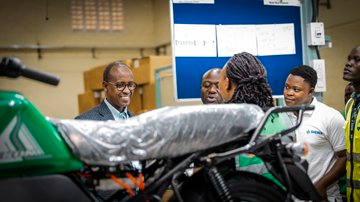
Rwabwogo said the progress already visible on the assembly lines — particularly the involvement of young Ugandans — demonstrates the potential for the sector to create jobs while strengthening domestic supply chains.
“Seeing today many young Ugandans manning the assembly line and the possibility of reducing import exposure on iron and steel parts, plastic casings, rubber and electric cable parts made me joyful,” he said. “We will make it.”
The strategy also aims to expand local production of components such as motorcycle frames, plastic casings, rubber parts and electric cables, which are currently largely imported.
Rwabwogo drew parallels with global manufacturing hubs such as Shenzhen, noting that industrial transformation often begins with modest assembly operations before expanding into advanced manufacturing.
“China began in 1988 with only 20 percent assembly gains in electric equipment in Shenzhen, but by 2007, Apple of the USA had outsourced almost 90 percent of its manufacturing to this city alone,” he said. “By 2014, more than a million employees were under one entity there.”
He said similar industrial growth could occur in Uganda if the country continues investing in manufacturing capabilities and supporting local entrepreneurs.
Rwabwogo also credited Yoweri Museveni for backing the initiative, as well as entrepreneur Gagan Gupta and project coordinator Rachelle Yayi for their role in advancing the partnership.
The initiative forms part of a broader national effort to strengthen export-oriented industrialisation and expand Uganda’s participation in emerging sectors such as electric mobility and green manufacturing.