

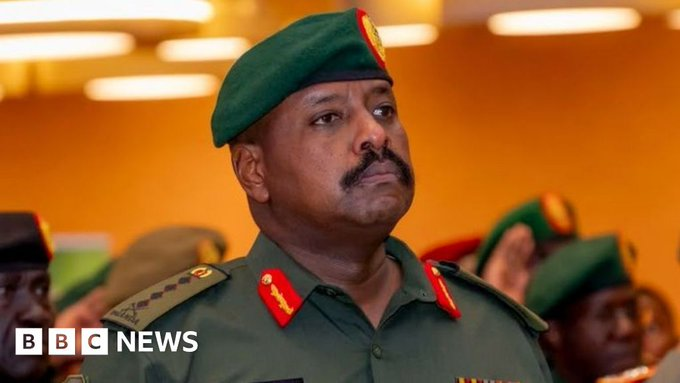
KAMPALA — The reappearance of Gen. Muhoozi Kainerugaba, Uganda’s Chief of Defence Forces (CDF), has renewed debate over President Yoweri Kaguta Museveni’s possible successor, with supporters increasingly positioning the army chief as a potential candidate in the 2031 presidential election.
The debate has exposed divisions over the prospect of a political transition from President Museveni to his son, with supporters presenting Muhoozi as a candidate capable of maintaining stability, while critics question the implications of a family-based transfer of power for Uganda’s democracy.
Groups including the Patriotic League of Uganda (PLU) and the Mwangaza African Revolutionary Study Groups have expressed support for Muhoozi’s political ambitions, with some of his supporters referring to him as the “Lion of Africa”.
Junior Minister Haruna Kasolo has also backed the idea of a smooth transition to Muhoozi, arguing that a family succession could help avoid political instability.
The Mwangaza African Revolutionary Study Groups, led by presidential aide David Mafabi, recently endorsed Muhoozi in a petition to the NRM Central Executive Committee. The group adopted what it called the Kyankwanzi Nyekundire Declaration at the National Leadership Institute in Kyankwanzi on November 13, calling for preparations for an orderly leadership transition and proposing Muhoozi as Museveni’s successor.
The endorsement adds to a growing campaign by the Patriotic League of Uganda, which has been mobilising support for Muhoozi’s proposed 2031 presidential bid.
In September, PLU officials announced that Muhoozi intended to contest the presidency in 2031. The announcement was made by David Kabanda, the group’s executive secretary in the office of its national chairman, who said the army chief had instructed him to communicate the decision publicly.
Muhoozi has also publicly expressed his intention to run for president in 2031, according to international media reports.
NRM denies internal resistance
The growing succession campaign has, however, encountered reports of disagreement within the ruling party.
Reports emerged following a November 10 meeting of the NRM Central Executive Committee (CEC) at State House Entebbe that some senior party officials had opposed efforts to position Muhoozi as Museveni’s successor.
According to an AFP report citing five people who attended the meeting, some members questioned Muhoozi’s political experience and controversial conduct on social media. The report also indicated that a vote on the proposal was abandoned after objections from members.
However, NRM Secretary General Richard Todwong dismissed the reports, describing claims that the party had rejected Muhoozi’s succession bid as false.
Todwong said the CEC routinely discusses political, social and economic matters affecting the country and that any decisions reached would be communicated through the party’s official channels.
Daudi Kabanda, who heads the office of the PLU chairman, also rejected claims of resistance, insisting that Muhoozi’s presidential ambitions had not faced opposition within the ruling party.
Questions over family succession
The prospect of Muhoozi succeeding his father has generated mixed reactions, particularly over the implications of a family-based transfer of political power.
Supporters argue that his military background, proximity to the presidency and association with the ruling establishment give him the experience and political connections needed to lead the country.
Some have also presented his potential presidency as a way of maintaining continuity and avoiding instability during a leadership transition.
Critics, however, question whether a transition from father to son would strengthen democratic institutions or deepen concerns about the concentration of political and state power within one family.
Opponents have also raised grievances over alleged human rights abuses, including abductions, corruption, high taxes and poor public services, arguing that the succession debate should not overshadow the country’s wider governance challenges.
Muhoozi currently serves as Chief of Defence Forces of the Uganda People’s Defence Forces and chairs the Patriotic League of Uganda.
His political ambitions also raise questions about the relationship between military service and elective politics. Section 99 of the UPDF Act requires serving military officers who wish to seek elective political office to resign or retire from the armed forces in accordance with the applicable regulations.
President Museveni has governed Uganda since 1986, making the question of who will eventually succeed him increasingly prominent within the ruling party and the wider political establishment.
Although Muhoozi’s supporters are already mobilising for 2031, the NRM has not formally announced a final decision on its presidential succession arrangements.
The latest endorsements and competing accounts of internal party discussions have therefore brought the question back into public debate: whether Uganda’s next leadership transition will be determined through established party and electoral processes or shaped by the political influence of the incumbent president and his family.