

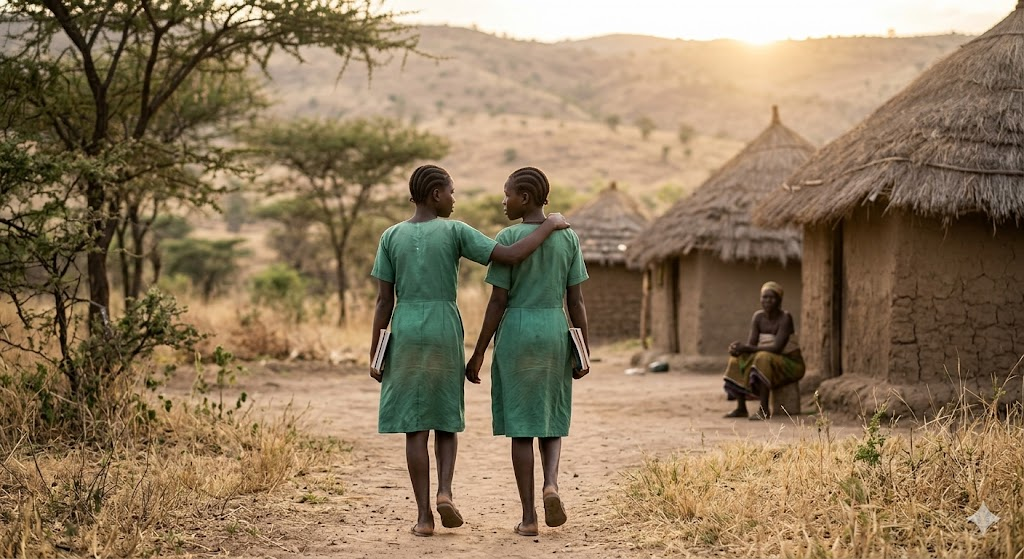
Kampala, April 8, 2026 — A new report by the Equal Opportunities Commission (EOC) has revealed that an estimated 533,000 secondary school girls in Uganda dropped out of school last year to enter cohabitation or early unions, a development experts describe as a deepening education and child protection crisis.
The figure, which accounts for more than half of the country’s female secondary school population, has raised alarm among education and child welfare stakeholders, who warn that the trend could undermine Uganda’s long-term human capital development.
The study, conducted between June and December 2025 across 20 districts, indicates that many of the affected girls are entering relationships with significantly older men, rather than peers of similar age.
“This is a crisis that requires urgent intervention,” said Susan Atukunda, who presented the findings at Kingdom Kampala. “These are children who should be in school, but instead they are being pushed into adult responsibilities.”
She noted that many of the unions are exploitative and often driven by a combination of cultural pressures, poverty, and systemic gaps in access to education.
Atukunda further warned that the practice is both illegal and harmful, contributing to long-term cycles of poverty and inequality.
Key findings highlight scale of challenge
The report paints a broader picture of Uganda’s secondary education landscape, estimating total enrolment at about 1.7 million learners, with 820,547 boys and 888,720 girls currently in school.
Uganda also has more than 14,000 government and 6,000 private secondary schools, yet access remains uneven across regions.
In Kaabong District, for example, 17 sub-counties reportedly have no secondary school, a gap the report says continues to push vulnerable girls out of formal education.
Cultural and economic drivers
Researchers attribute the surge in dropouts to what they describe as “silent yet powerful cultural and systemic factors,” including poverty, cultural norms, and lack of infrastructure.
In many households, early cohabitation or marriage is seen as a coping mechanism for economic hardship, while in some regions harmful practices and entrenched gender norms continue to affect girls’ education outcomes.
Policy response and recommendations
Responding to the findings, Julius Tayebwa, acting undersecretary at the Ministry of Education, urged parents to prioritise education over early marriage, stressing the need to “inculcate values” that keep children in school.
The EOC has recommended a set of interventions aimed at reversing the trend, including intensified public sensitisation campaigns on girls’ education, improved teacher deployment to underserved areas, and more equitable funding allocation based on population needs.
Gilbert Siima from the National Curriculum Development Centre (NCDC) also called for proportional planning in education infrastructure, arguing that school distribution must reflect demographic realities to prevent children from dropping out due to distance.
Growing concern over retention rates
While Uganda has made progress in improving school enrolment, the report warns that retention—particularly for girls—remains a major challenge. Stakeholders caution that without urgent intervention, the country risks losing a significant portion of its future workforce before completion of secondary education.