


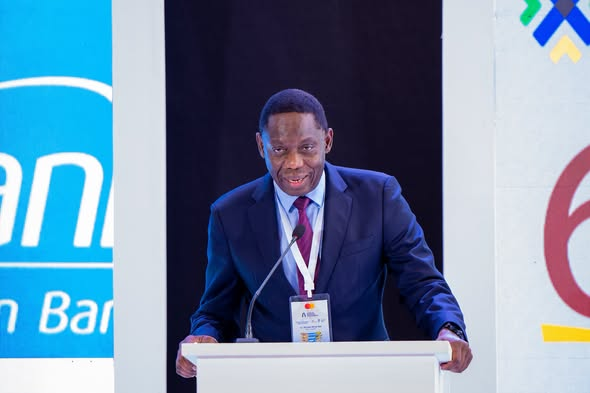
KAMPALA — Bank of Uganda Governor Michael Atingi-Ego has assured the financial sector that the central bank has the capacity to stabilise the shilling amid recent depreciation pressures linked to developments in global oil markets.
Atingi-Ego made the remarks on Friday, September 18, 2026, while addressing participants at the 9th Annual Bankers Conference organised by the Uganda Bankers’ Association at the Kampala Marriott Hotel.
“Colleagues, towards the end of last week the currency began to depreciate quite significantly. You all know what’s happening in the global oil prices, and our currency is a market-determined currency,” Atingi-Ego said.
The Governor said Uganda had experienced similar episodes of exchange-rate pressure in recent years and had managed to weather them.
He recalled that between July and August 2022, central banks in advanced economies raised interest rates, triggering capital outflows from emerging markets. During that period, the shilling moved from about Sh3,650 to nearly Sh3,900 to the US dollar before stabilising.
Atingi-Ego also pointed to August 2023, when the World Bank announced that it would not disburse new financing to Uganda. The shilling subsequently moved close to Sh4,000 to the dollar, he said.
He cited another episode in February 2024, when the currency reached Sh4,000 following developments in a neighbouring country’s bond market.
“In September 2026, because of global oil developments, the currency is trading at about Sh3,930 right now,” Atingi-Ego said.
He said the comparison with previous episodes was intended to reassure financial-sector players that the current depreciation should be viewed in the context of Uganda’s experience with external shocks.
“Why am I bringing all this? I am bringing all this to say Bank of Uganda has what it takes to stabilize this exchange rate. So, be still. All will be fine,” he said.
The Bank of Uganda is responsible for formulating and implementing monetary policy and managing Uganda’s foreign exchange reserves, which support the implementation of exchange-rate and monetary policies and help meet external obligations.
The Bank publishes official foreign-exchange rates daily, with the rates intended to reflect prevailing market conditions.
The remarks came during a conference held under the theme “The Role of Uganda’s Financial Institutions in Facilitating Tenfold GDP Growth.” The Uganda Bankers’ Association said the event brought together policymakers, regulators, financial-sector executives, development partners and other stakeholders to discuss the role of financial institutions in supporting Uganda’s economic transformation.
The conference also featured discussions on financing Uganda’s minerals and oil and gas sectors, science, technology and innovation financing, tourism development, agro-industrialisation and export development.
The latest movement of the shilling comes amid heightened volatility in global oil markets, with higher oil prices potentially increasing Uganda’s demand for foreign currency to finance imports.
Atingi-Ego’s comments therefore put the current movement of the shilling within a broader pattern of exchange-rate adjustments that Uganda has experienced in response to global and regional developments.

