



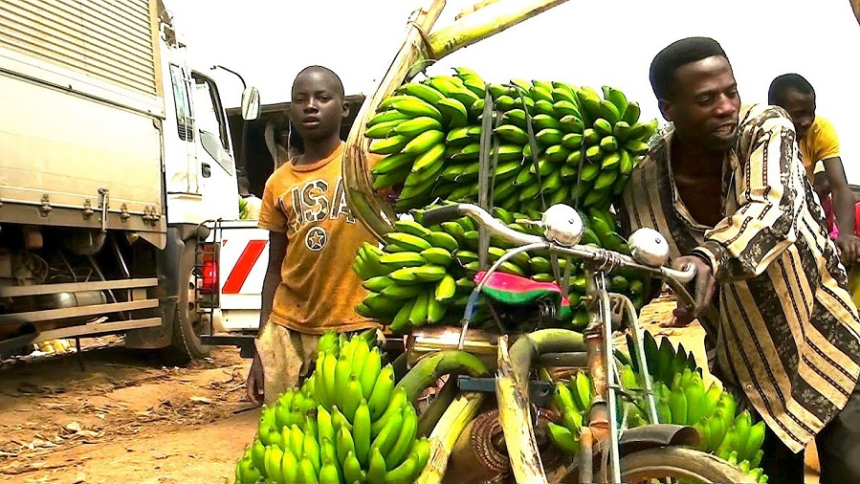
Kampala — A viral social media video showing matooke loaders casually picking bananas from trucks they are offloading has sparked a nationwide debate on labour practices, culture, and ethics in Uganda’s informal economy.
The clip, originally shared by UgandanGods, shows workers grabbing handfuls of matooke—Uganda’s staple plantain—while unloading produce. The accompanying caption claims the loaders are not formally paid and instead take bananas as compensation, a practice that has divided public opinion online.
Prominent academic and cartoonist Jim Spire Ssentongo amplified the discussion after reposting the video, linking it to themes in his book What Died When We Lived, which explores moral decline in society. His post quickly gained traction, drawing more than 1,300 likes and over 200 replies, according to platform metrics.
Online reactions have been sharply split. Critics argue that the practice reflects normalised petty theft and contributes to a broader erosion of trust in everyday transactions. Some commenters warned that tolerating such behaviour at small scales could reinforce systemic corruption across sectors.
However, others have defended the loaders, describing the practice as a long-established informal arrangement rather than theft. Farmer Albert Kunihira said the custom—locally referred to as “MYERA”—allows loaders to take a small portion, often about three fingers of bananas per bunch sold, as a form of in-kind payment.
Supporters argue that MYERA helps keep transport and labour costs low in Uganda’s agricultural markets, where formal wage structures are often absent. They say the system has historically functioned on mutual understanding between traders, farmers, and loaders.
The debate highlights broader questions about labour rights and compensation in Uganda’s informal sector, which employs a large share of the population. Experts note that while such practices may be culturally embedded, they also expose gaps in regulation and worker protections.
As discussions continue online, the viral video has reignited scrutiny over how informal economic norms intersect with modern expectations of accountability and fairness—raising difficult questions about where tradition ends and exploitation or misconduct begins.

