

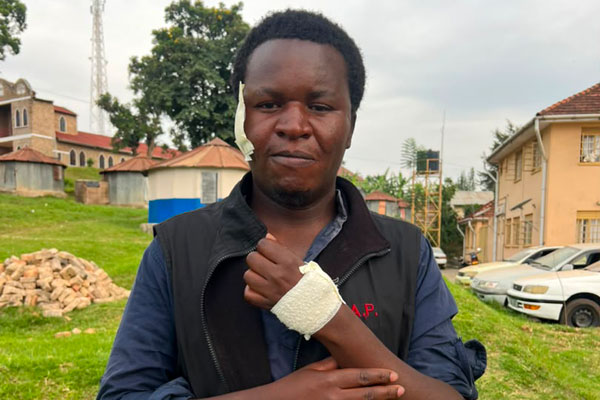
MITOOMA, Uganda — Media rights advocates and human rights organisations are demanding an independent investigation into allegations that two journalists were assaulted and unlawfully detained by police officers while carrying out a reporting assignment in Mitooma District.
The incident reportedly occurred at Kashenshero Town Council Police Station, where the journalists had gone to verify claims made in a viral TikTok video alleging that the station is frequently left unattended by officers.
According to accounts from the journalists, what began as a routine fact-checking exercise escalated into a confrontation with police personnel at the station, culminating in their arrest and detention.
The journalists further alleged that they were subjected to degrading treatment while in custody. One of them claimed that officers forced them to eat mandazi while their noses were blocked, an allegation that has not been independently verified.
The reported incident has triggered widespread concern among media stakeholders, who argue that journalists should be able to carry out their work without fear of intimidation, harassment, or violence.
Human rights defenders have called on the Uganda Police Force to provide a full account of the events and identify any officers who may have acted outside the law.
Several rights groups have also urged the Uganda Human Rights Commission to intervene and establish the facts surrounding the incident, warning that attacks on journalists undermine constitutional guarantees of freedom of expression and access to information.
“Journalists play a critical role in holding public institutions accountable. Any allegations of assault, unlawful detention or degrading treatment must be investigated thoroughly and transparently,” one media rights advocate said.
The Uganda Police Force had not issued an official statement on the allegations by press time, despite growing public attention and calls for accountability.
The incident has reignited concerns about the safety of journalists operating in rural and upcountry districts, where press freedom advocates say access to justice and oversight mechanisms can be limited.
Media organizations have warned that if the allegations are confirmed, the incident would represent a serious violation of press freedom and professional rights.
The case has also renewed debate about the relationship between security agencies and the media, with journalists’ associations emphasizing that verification of public claims and investigation of matters of public interest are fundamental aspects of journalism.
As pressure mounts on authorities, media groups are expected to formally petition police leadership and relevant oversight bodies to ensure a credible investigation and appropriate action against any officers found culpable.
The journalists have since been released, but calls continue for accountability, transparency, and stronger protections for media practitioners carrying out their duties across the country.