

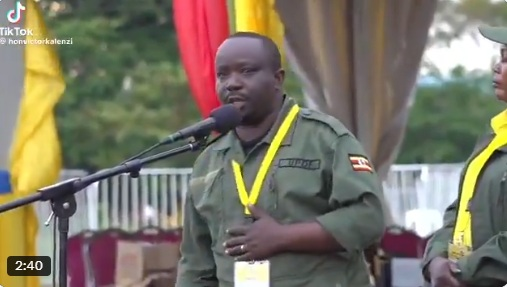
Kyankwanzi — A newly elected Member of Parliament, Victor Kalenzi, has drawn national attention after revealing he plans to use a Shs300 million award to fund cancer treatment for his son in India, while sharply criticising Uganda’s reliance on foreign medical care.
Speaking during the ongoing National Resistance Movement (NRM) retreat at the National Leadership Institute, attended by over 350 MPs and Yoweri Kaguta Museveni, Kalenzi used his personal experience to highlight systemic gaps in Uganda’s healthcare system.
According to posts circulating on X, the MP—who is also a medical doctor and hospital owner in Fort Portal—spoke candidly about the financial burden of seeking treatment abroad.
“Mr President, we are bleeding millions of dollars sending our people abroad for treatment that we should be handling right here at home,” Kalenzi said. “Invest seriously in specialised hospitals so that ordinary Ugandans don’t have to sell land, borrow, or die waiting just because we lack proper cancer, heart, or diabetes care locally.”
He further revealed that his own family has been affected, noting that the funds he received would go toward his son’s treatment overseas, underscoring the difficult choices many Ugandan families face.
The remarks stood out during the retreat, where much of the discussion had centred on party cohesion and governance, with observers noting the rarity of such direct criticism delivered in a personal context.
Social media users praised Kalenzi for raising a sensitive but critical issue. One user described it as “a hard truth,” noting that while others focused on praising leadership, the MP “highlighted the dangers of going overseas for treatment every time.”
Uganda is estimated to spend between Shs200 billion and Shs300 billion annually on medical tourism, as patients seek specialised care abroad due to limited local capacity in areas such as cancer, cardiology, and advanced diagnostics.
Kalenzi warned that continued dependence on foreign healthcare systems exposes the country to external vulnerabilities, including geopolitical risks and unequal access to treatment.
His intervention has reignited debate on the need for investment in Uganda’s health infrastructure, particularly in specialised facilities capable of handling complex diseases.
As the retreat continues, his remarks have added urgency to calls for reforms—placing healthcare self-sufficiency at the centre of national development discussions.