

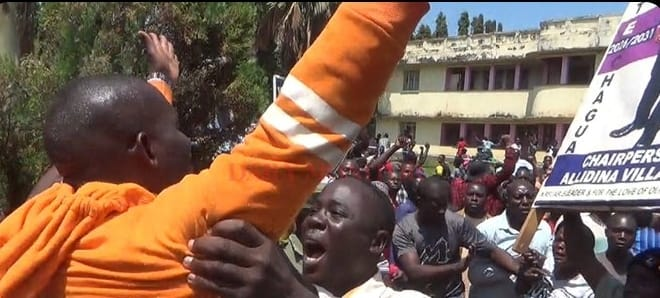
Jinja City — The outcome of the Local Council I (LC1) elections in Jinja City has revealed a striking contrast in the city’s political landscape, with the National Resistance Movement (NRM) securing an overwhelming majority of village chairperson seats despite the opposition’s success in parliamentary and mayoral races earlier this year.
According to the declared results, NRM candidates won 113 of the 141 LC1 chairperson positions contested across the city. The remaining seats were shared between independent candidates and those backed by opposition parties.
The results have sparked debate over why voters who overwhelmingly supported opposition candidates in national elections shifted their support to NRM candidates at the village level.
NRM leaders attributed the victory to stronger grassroots organisation and improved candidate selection. Jinja City NRM General Secretary Medi Ntuyo said the party learned from setbacks suffered during the general elections by fronting candidates with established community support and strengthening mobilisation structures at village level.
“We identified candidates who were already trusted by residents and encouraged them to remain close to the communities throughout the campaigns,” Ntuyo said.
Opposition leaders, however, pointed to internal challenges rather than a change in public sentiment.
FDC Deputy National Head of Mobilisation Medi Mbentyo said divisions among opposition supporters weakened their candidates in several villages. He argued that competition among like-minded candidates split votes, making it easier for NRM contenders to emerge victorious.
Former Jinja City Mayor Peter Okocha Kasolo said the village elections were largely decided by candidates’ records within their communities instead of party affiliation. He argued that many successful NRM candidates campaigned on practical community issues, while some opposition candidates concentrated on national political debates that resonated less with voters at the village level.
Among the winners was Badiru Nabugo, who retained the Mainstreet West Village chairmanship unopposed. He credited his victory to continuous engagement with residents and providing assistance on community matters over the years.
NUP Head of Ideology and Training Pastor Andrew Muwanguzi offered only a brief response, saying it was premature to make a detailed assessment of the party’s performance.
Political analysts say the Jinja outcome demonstrates that local elections in Uganda are often influenced by personal credibility, accessibility and community service as much as party loyalty. While parliamentary elections tend to reflect broader national political trends, village contests frequently reward candidates with strong local ties.
The newly elected LC1 chairpersons are expected to assume responsibility for mobilising residents, mediating local disputes and coordinating community development activities, roles that place them at the centre of grassroots governance.