

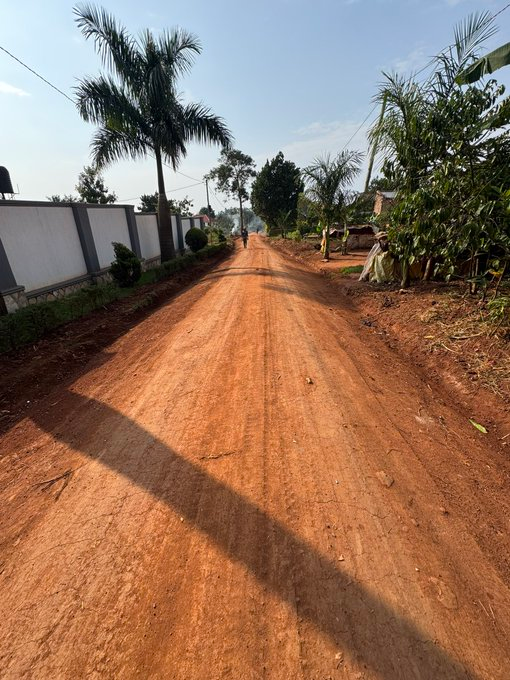
A village clean-up campaign in Bamutakudde is beginning to change not only the appearance of the community but also how residents think about waste and their surroundings.
Local Council I Chairman Solomon Serwanjja said residents have been coming together every Saturday to clean the village, with the initiative now expanding into waste sorting and recycling.
“My heart is full. Here to celebrate little wins,” Serwanjja said in a social media post on Saturday.
“Every Saturday we clean Bamutakudde village together, and it’s beginning to pay off. Streets are cleaner, homes are cleaner, mindsets are changing.”
The residents have now agreed to separate recyclable waste from non-recyclable waste. Serwanjja said recyclable materials will be sold, while decomposing waste will be used to feed gardens.
The initiative began shortly after Serwanjja’s election as LC I chairman last month, when he pledged to promote regular community meetings and clean-up exercises as part of efforts to improve sanitation and living conditions in the village.
The clean-up campaign is also being linked to broader community development ambitions, including access to clean water, youth training and income-generating activities such as beekeeping.
The progress has attracted attention from members of the public online. Journalist and former politician Winnie Kiiza responded to Serwanjja’s post with a brief message of encouragement, while social media commentator Stanley The Investigator suggested that Bamutakudde could eventually become a model village.
“At this rate, Bamutakudde is headed for the Country’s model village,” he said, adding that Serwanjja could eventually be travelling internationally to share the experience.
The campaign comes at a time when waste management remains a persistent challenge in many Ugandan communities, where rubbish collection systems often struggle to keep pace with population growth and urban expansion.
But Bamutakudde’s experiment raises a more basic question: what happens when waste stops being seen simply as rubbish and starts being treated as a resource?
Plastic and other recyclable materials can generate income, while organic waste can return to the soil as compost. The village’s Saturday routine is therefore becoming more than a cleaning exercise; it is an attempt to make sanitation a community habit rather than a government service that residents wait for.
The residents have already demonstrated the principle in another practical way, recently coming together to repair a road in the area.
For Bamutakudde, the ambition appears modest: clean the village every Saturday, sort the waste and find value in what would otherwise be thrown away.
But sometimes development begins exactly there — not with a grand project, but with people deciding that the place where they live is their responsibility.