
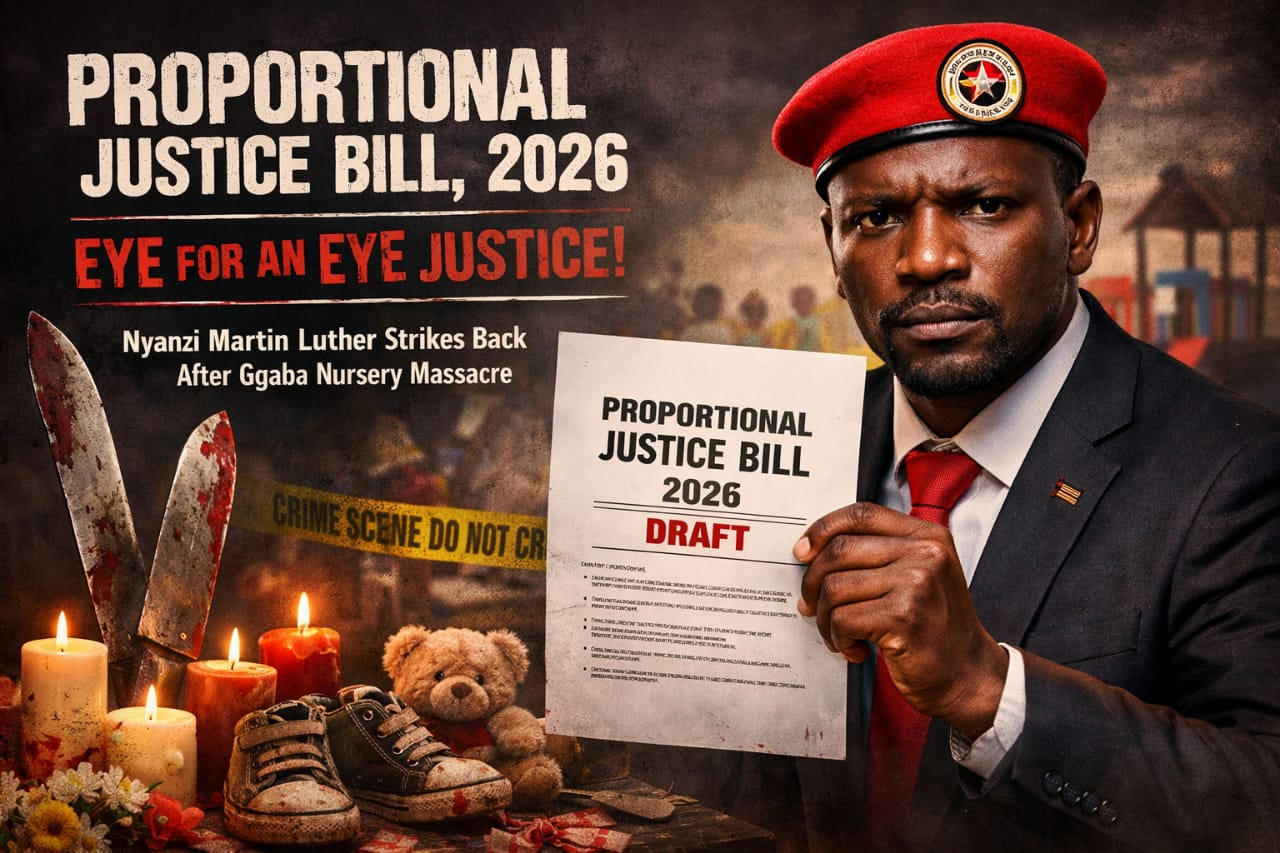
Kampala, Uganda — April 6, 2026 — A controversial proposal to introduce “eye-for-an-eye” justice into Uganda’s legal system is rapidly gaining attention, just days after a brutal attack that left four toddlers dead in Kampala.
The proposed Proportional Justice Bill, 2026, still in its conceptual stage, is being framed by its proponents as a response to growing public anger over violent crime and what many see as weak punishment for offenders.
The draft was initiated by 16-year-old youth advocate Nyanzi Martin Luther in collaboration with legal experts. While it has not yet been formally tabled before Parliament, its central proposal — that punishment should directly match the harm inflicted — has sparked intense national debate.
Massacre That Shocked the Nation
The bill’s emergence follows the April 2 attack at Ggaba Early Childhood Development Program in Makindye Division, where a suspect allegedly killed four young children using machetes and knives.
Police identified the suspect as Christopher Okello Onyum, who reportedly gained access to the school by posing as a parent seeking enrollment.
The victims — all aged between two and three years — died at the scene. The suspect was later subdued by members of the public and handed over to authorities. Investigations into the motive remain ongoing, with early reports pointing to possible mental health concerns, though no official conclusion has been announced.
The attack has reignited fears over child safety and amplified longstanding concerns about violent crime across the country.
What the Bill Proposes
According to its drafters, the Proportional Justice Bill seeks to fundamentally reshape Uganda’s sentencing framework by introducing strict proportionality in punishment.
“We cannot keep burying our babies while killers receive kid-glove treatment,” Nyanzi said. “Justice must hurt exactly as much as the crime inflicted.”
Key proposals include mandatory sentencing tied to the severity of harm, classification of offences into defined tiers, and significantly harsher penalties where victims are children. The draft also proposes the creation of a national victim compensation fund and maintains provisions for fair trial and appeal rights.
Support and Skepticism
The proposal has resonated strongly with sections of the public, particularly among parents and communities affected by violent crime, who view it as a potential deterrent.
However, legal experts and human rights advocates have urged caution, warning that rigid “eye-for-eye” principles could conflict with Uganda’s constitutional framework and international human rights obligations.
Critics also argue that such an approach risks undermining judicial discretion and rehabilitation efforts, which remain key pillars of modern criminal justice systems.
A Broader National Reckoning
The debate comes at a time when Uganda is grappling with wider questions about justice, accountability, and the protection of vulnerable groups.
As the country mourns the loss of four young lives, the proposed law has become a focal point for deeper reflection on whether current legal mechanisms are sufficient to deter violent crime and deliver justice.
Nyanzi and his team say the draft remains open to public input, inviting contributions from legal professionals, religious leaders, and citizens before it is formally introduced in Parliament.
For now, the Proportional Justice Bill stands as both a provocative proposal and a symbol of a nation wrestling with how best to respond to tragedy — and how far justice should go.