

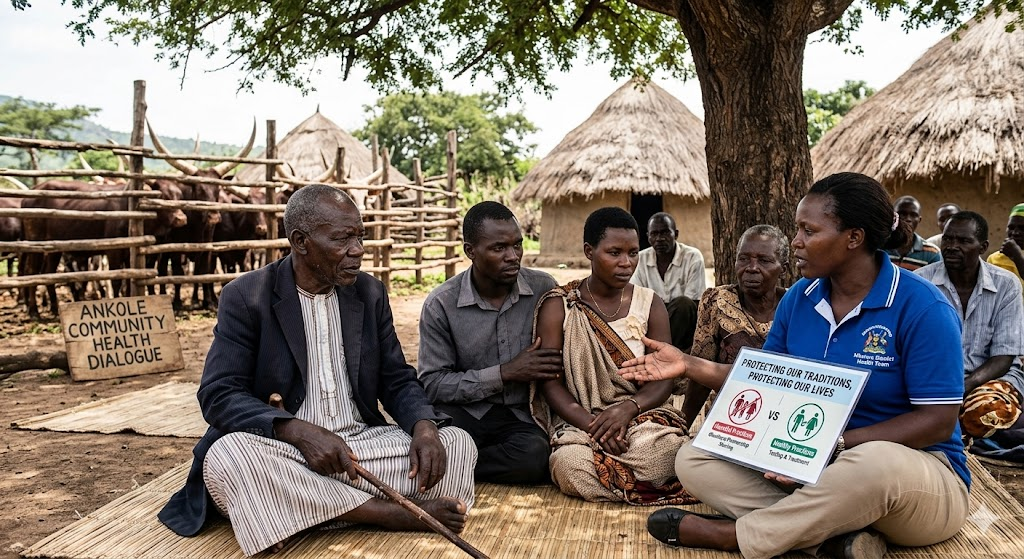
MBARARA — Health experts and cultural leaders in the Ankole sub-region have sounded a grim warning: ancient cultural practices, long thought to be fading, are making a dangerous comeback and undermining the national fight against HIV/AIDS.
Leading the outcry is Sarah Kamulindwa, the HIV focal person for Mbarara District, who identified the practice of “Okuehura”—where a man offers his wife to a visiting kinsman or close friend as a sign of high hospitality—as a primary driver of new infections.
“We are seeing a worrying trend where traditional hospitality is literally becoming a death sentence,” Kamulindwa noted during a community health engagement. “When you combine these practices with a lack of protection, you create a perfect storm for the virus to spread across entire family networks.”
The Burden of Tradition
Beyond “Okuehura,” officials highlighted other high-risk customs still prevalent in rural pastoralist clusters, including:
Okwarira (Widow Inheritance): Where a deceased man’s wife is “taken over” by a male relative, often without prior HIV testing for either party.
Okusembezererwa: A practice involving the sharing of sexual partners among kinsmen to “strengthen” blood ties.
By The Numbers
The alarm comes at a time when Uganda continues to face a high number of new HIV infections.
Statistics cited by health officials indicate: 37,000 new HIV infections were recorded nationally in 2024. Young women aged 15-24 account for 78% of infections among adolescents.
Uganda remains among the top six African countries with the highest mental health and substance abuse cases—factors that experts say often lead to a lapse in safe-sex practices.
Religious Leaders Join the Fight
The Church has not stayed silent. During a recent visit to the North Ankole Diocese head offices, religious leaders including Bishop Stephen Namanya urged the community to abandon “harmful and outdated” cultural norms in favour of modern health protocols.
“We cannot hide behind ‘tradition’ while our people perish,” the Bishop remarked. “The sanctity of marriage must be protected, but more importantly, the lives of our youth must be saved through testing and faithfulness.”
The Way Forward
Health teams in the region are now pivoting toward “Culture-Sensitive Counseling,” working with local elders to redefine hospitality without sexual risk.
Officials are calling for mandatory testing within these kinship circles and a move toward the “Test and Treat” model to suppress viral loads in communities where these practices are hardest to break.