
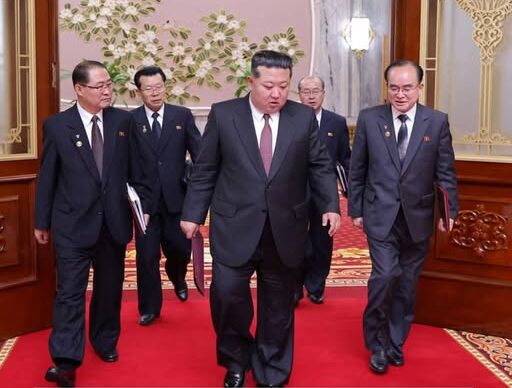
Pyongyang, North Korea — North Korean leader Kim Jong Un has effectively secured another term as the country’s top leader after a landslide result in the March 15, 2026, parliamentary elections that saw his ruling party claim 99.93 % of the votes.
Official figures released by state authorities reported that nearly 100 % voter turnout (99.99 %) was recorded, with only 0.07 % of ballots opposed to the slate of candidates endorsed by the ruling Workers’ Party of Korea (WPK).
Although Kim himself did not stand as a direct candidate for the legislature, the vote outcome ensures he remains firmly in control as the leader of the WPK and a dominant figure in state leadership. State media portray the result as a powerful mandate from the people, while outside observers describe the electoral process as tightly controlled and lacking genuine competition.
Earlier in February 2026, Kim was also re-elected as General Secretary of the Workers’ Party during the party’s Ninth Congress in Pyongyang, consolidating his grip over both party and state structures.
Following the parliamentary vote, the newly elected Supreme People’s Assembly (SPA) convened and confirmed Kim’s leadership posts, including re appointment as President of the State Affairs Commission — the highest state office — cementing his role at the helm of North Korea’s political system.
International reactions to the election results have been mixed, with many foreign analysts viewing the vote as a symbolic affirmation of Kim’s rule in a tightly controlled political environment rather than a competitive democratic process.