

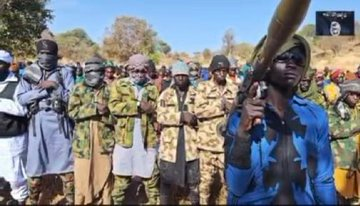
DAKAR — Africa’s Sahel region remains the world’s most affected area by terrorism, accounting for nearly half of all global terror-related deaths in 2025, according to a new report.
The latest Global Terrorism Index by the Institute for Economics and Peace shows that while overall fatalities declined, the region continues to dominate global terrorism trends for the third consecutive year.
In 2025, nearly half of the 5,582 terrorism-related deaths worldwide occurred in the Sahel, a vast semi-arid belt stretching south of the Sahara Desert from the Atlantic Ocean to the Red Sea.
Shift in global terrorism patterns
The report highlights a major geographical shift, noting that the epicentre of terrorism has moved from the Middle East and North Africa to sub-Saharan Africa.
Since 2007, terrorism-related deaths in the Sahel have increased tenfold, rising from just one percent of global fatalities to nearly half today.
Despite the persistent threat, the region recorded a drop in total deaths compared to 2024, when more than half of the world’s 7,555 terrorism fatalities were recorded there.
Country rankings shift
Among the hardest-hit countries, Burkina Faso—previously the most affected for two consecutive years—recorded a significant 45 percent drop in deaths to 846 in 2025, though it remained among the worst-affected nations.
Niger climbed to third place globally after a surge in attacks, recording 703 deaths, more than half of them civilians.
Nigeria also rose in the rankings to fourth place, with fatalities increasing by 46 percent to 750.
Meanwhile, Mali saw an improvement, dropping to fifth position with 341 deaths, down from 604 the previous year.
Persistent insecurity
The findings come as Sahel states continue to strengthen joint security efforts to combat militant groups operating across porous borders.
However, the report underscores that despite some progress in reducing fatalities, the region remains the focal point of global terrorism, raising ongoing concerns over security, governance and humanitarian conditions.