

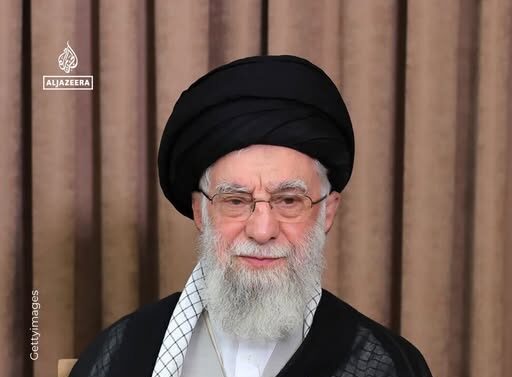
TEHRAN/JERUSALEM/WASHINGTON — Iran has confirmed that its Supreme Leader, Ayatollah Ali Khamenei, was killed in coordinated United States and Israeli airstrikes early Saturday, marking a dramatic escalation in the Middle East conflict and triggering retaliatory attacks across the region.
Multiple international news outlets — including Reuters, BBC, CNN, NBC News, The Washington Post and NPR — reported the killing on February 28, citing senior Israeli officials and subsequent confirmation from Iranian state media. Iran’s official news agency IRNA said Khamenei was killed in his office in Tehran during predawn strikes targeting senior political and military leadership.
Khamenei, who had led the Islamic Republic since 1989, was the country’s highest political and religious authority.
Trump announces strike
US President Donald Trump announced the operation on his Truth Social platform, describing Khamenei as “one of the most evil people in history” and framing the attack as part of a broader effort to weaken Iran’s leadership and curb its regional influence.
In comments reported by Axios and other US media, Trump said the conflict could “go long” or end quickly depending on Tehran’s response, suggesting there were possible diplomatic “off-ramps.”
The Israeli government has not publicly released operational details but Israeli media cited unnamed senior officials confirming the targeted killing.
Iran vows ‘devastating’ retaliation
The Islamic Revolutionary Guard Corps (IRGC) pledged revenge, announcing it had launched missile and drone attacks on Israeli military facilities and on at least 27 bases hosting US troops in the Middle East.
Explosions were reported in parts of the Gulf, including Dubai in the United Arab Emirates and Doha in Qatar, according to live coverage by Al Jazeera Media Network and other broadcasters.
Air raid sirens sounded in Tel Aviv and other Israeli cities as Israel carried out follow-up strikes inside Iran.
Iran declared 40 days of national mourning and announced public holidays in honour of Khamenei.
Ali Larijani, secretary of Iran’s Supreme National Security Council, warned that Iran would make the United States and Israel “pay” for what he described as aggression.
Emergency UN session
An emergency meeting of the UN Security Council was convened at Iran’s request, with China and Russia backing the session. UN Secretary-General António Guterres was expected to chair the meeting and address the rapidly deteriorating situation.
Iran’s foreign minister, in a letter to the council cited by diplomats, argued that Tehran retains the right to self-defence under the UN Charter.
Fears of wider war
Security analysts say the killing of Khamenei represents an unprecedented strike against the core of Iran’s clerical leadership and could reshape the country’s internal power structure.
Rob Geist Pinfold, a scholar of international security at King’s College London, told Al Jazeera that regime change is unlikely to result solely from air power, warning that the region could be headed for a prolonged conflict.
Regional powers, including Turkiye, have offered to mediate a ceasefire, while Gulf states remain on high alert amid fears of further missile strikes.
Uncertainty over succession
Under Iran’s constitution, the Assembly of Experts is responsible for appointing a new supreme leader. However, with senior officials also reported killed in the strikes, questions remain about how quickly a transition can occur.
Large pro-government gatherings were reported in Tehran, Mashhad and other cities, with crowds condemning the attacks and expressing defiance.
The situation remains fluid, with continued military activity reported on both sides and the potential for further escalation. International leaders have urged restraint as the region braces for what could become one of the most consequential confrontations in decades.