


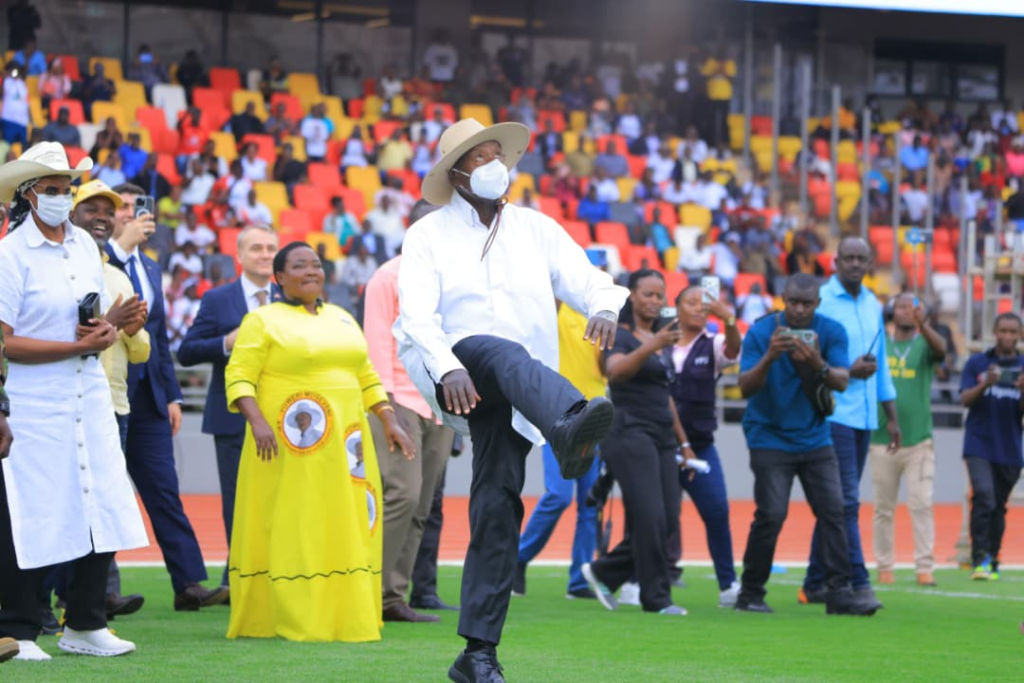
Hoima City — President Yoweri Kaguta Museveni on Wednesday officially commissioned the state-of-the-art Hoima City Stadium, marking a major boost to Uganda’s preparations to co-host the 2027 Africa Cup of Nations (AFCON) alongside Kenya and Tanzania.
The colourful ceremony, held in Hoima City in the Bunyoro sub-region, drew thousands of residents, sports fans, government officials and dignitaries from across the country and beyond.
The President was accompanied by the First Lady and Minister of Education and Sports, Maama Janet Kataaha Museveni, under whose docket the landmark project was implemented.
Constructed by the Turkish firm Summa International Construction Company Inc., the Hoima City Stadium is a $129 million (approximately Shs463 billion) multi-sports complex that was completed in a record 12 months, four months ahead of schedule. The government signed the construction contract with Summa in June 2024 as part of Uganda’s obligations under the AFCON 2027 “Pamoja Bid” with Kenya and Tanzania.
Addressing the gathering, President Museveni lauded Summa for what he termed exceptional workmanship and efficiency, saying the stadium demonstrated what Uganda can achieve with proper planning, discipline and prioritisation.
“I want to thank the Turkish company for the good work. I have seen the stadium, and I have also seen some of the roads they have constructed. They are very good workers, and we are going to do more with them,” Museveni said.
Declaring the facility officially open, the President announced: “It is now my pleasure to officially commission the Hoima City Stadium,” — a statement that was met with loud cheers from the packed stands.
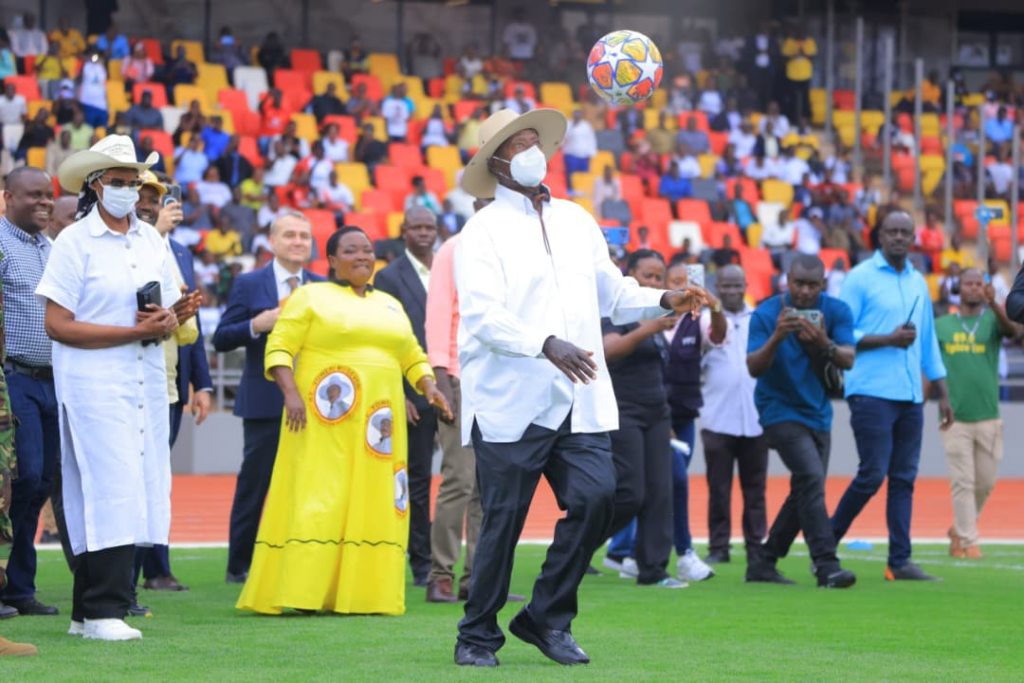
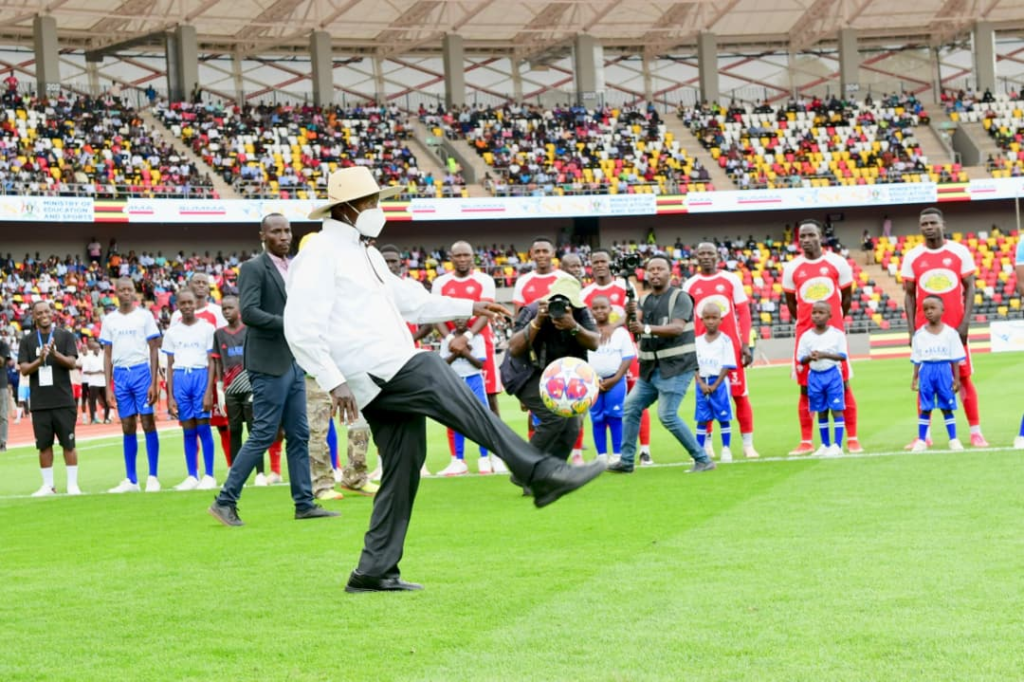
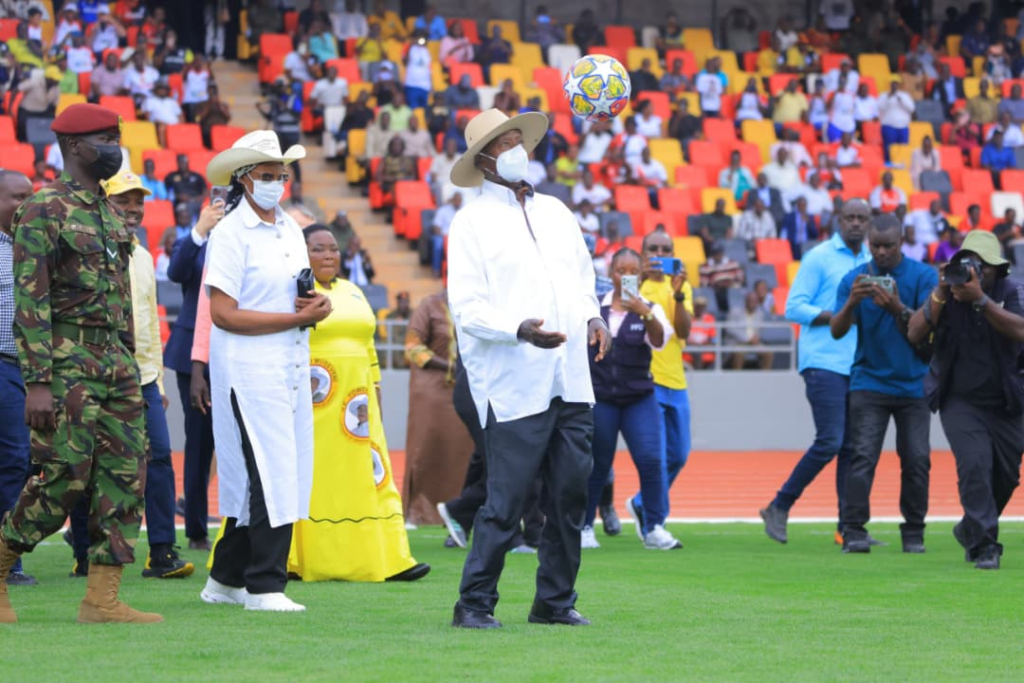
In a symbolic gesture that delighted fans, President Museveni stepped onto the pitch and juggled a football three times at the centre circle, sparking ululations and prolonged applause from spectators.
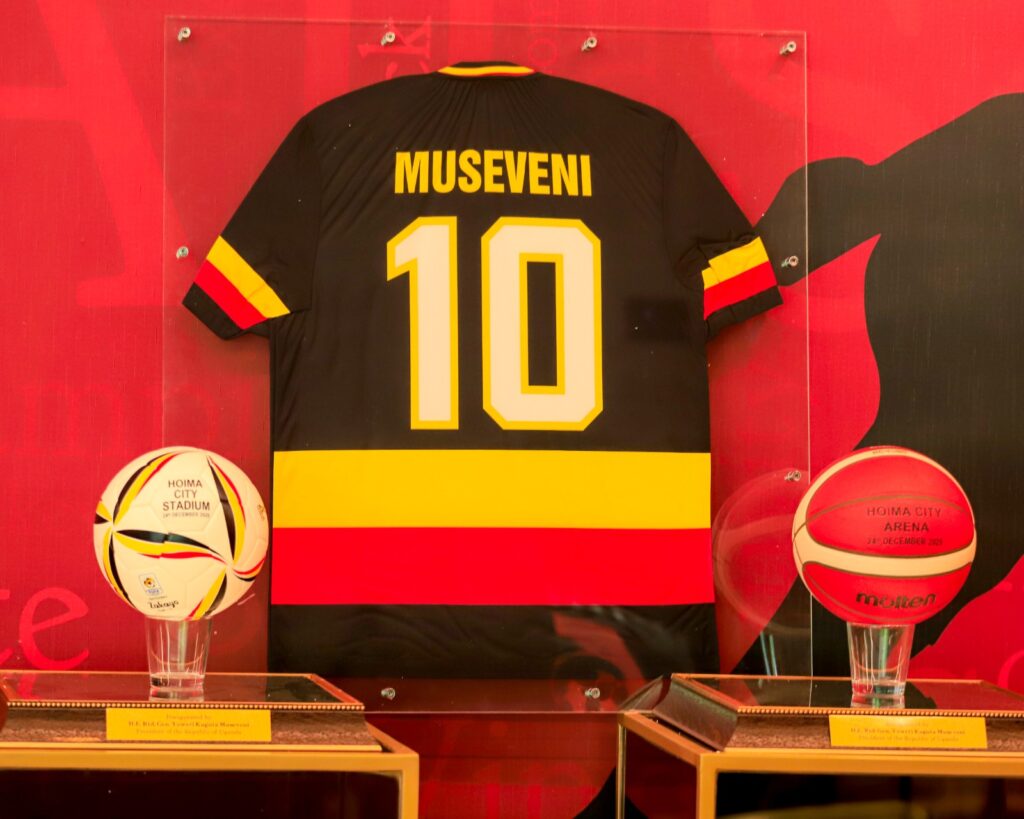
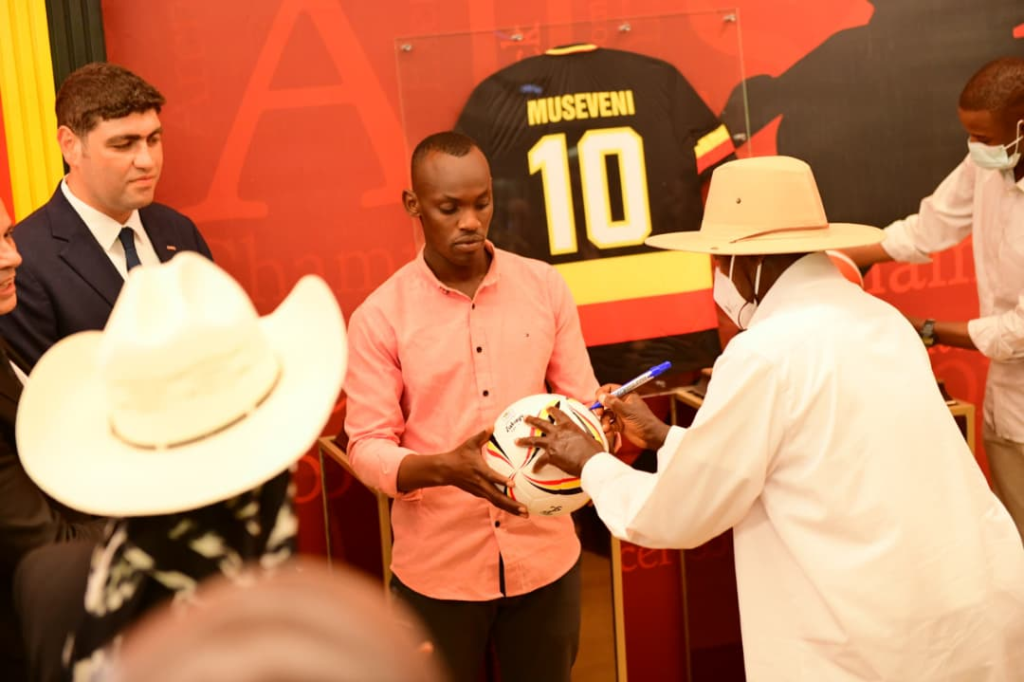
The president was also gifted a jersey numbered 10.
Built on 34 acres on the outskirts of Hoima City, the complex features a 20,000-seater outdoor stadium capable of hosting football, rugby and athletics, alongside a 2,000-seater indoor arena for basketball, netball, volleyball and other indoor sports. It also includes training grounds, athletes’ facilities, administrative offices, media zones, parking areas, and modern safety and security installations.
President Museveni paid special tribute to the family of the late Dr Rujumba, who donated 10 acres of land to support the project. “I want to start by thanking the family of the late Rujumba for the land to construct the stadium. Thank you, the Rujumba family, for your patriotism,” he said.
He also addressed public debate over the project’s financing, stressing that the stadium was fully funded by the Government of Uganda after a deliberate decision to avoid costly pre-financing arrangements.
“Initially, the Summa company was supposed to pre-finance the project, but we found that their money came with a lot of interest. So, we said no — let us fund the project ourselves,” Museveni explained.
Responding to critics questioning government expenditure on sports infrastructure, the President argued that strong economic fundamentals underpin Uganda’s investments.
“I have been seeing people in the media talking about this and that — things they are not sure about. The truth is that we have constructed this stadium with our own money in the shortest time possible because we have the money,” he said. “Uganda has the money, but we cannot do everything at once. Development requires prioritisation.”
Museveni linked Uganda’s capacity to undertake such large-scale projects to decades of economic restructuring under the NRM government, highlighting agriculture as the backbone of the economy. “Agriculture is very strong. We don’t import food. Bananas, maize, milk, beef — all these are produced here. That is the base of our economy,” he said.
From agriculture, he noted, Uganda has expanded into manufacturing — including vehicle assembly — and services such as tourism, hospitality, music, dance and drama, and now sports. “We had not concentrated so much on sports before because we were busy with security, agriculture, manufacturing and services. But now sports are also part of the economy,” Museveni added.
The President described Uganda’s successful bid to co-host AFCON 2027 as a turning point that accelerated the development of sports infrastructure.
“When we took on the responsibility of hosting AFCON 2027 with Kenya and Tanzania, we realised we could not afford to be embarrassed,” he said. “We said we must do what it takes so that when visitors come, we have everything ready.”
He said Hoima City Stadium exemplifies what he called the “NRM method of work” — identifying priorities, mobilising resources and delivering results within set timelines. “This AFCON has stimulated us to do something here. If you want to understand prioritisation, come to Hoima and look at this stadium,” Museveni said.
Among the dignitaries in attendance were Deputy Speaker of Parliament Thomas Tayebwa, Prime Minister Robinah Nabbanja, Cabinet ministers, Members of Parliament, cultural leaders, and thousands of football enthusiasts from across Uganda.