

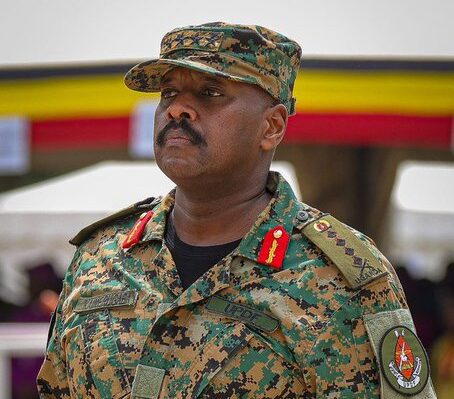
Chief of Defence Forces Gen Muhoozi Kainerugaba has warned veteran political figures, including Dr Kizza Besigye, against making public statements, while demanding compensation from the Bank of Uganda over the closure of Greenland Bank in 1999.
In a series of posts on X on Tuesday, November 24, Gen Muhoozi declared that former political and military figures he described as “Historicals” were no longer permitted to speak publicly and threatened punishment for those who defied the directive.
“I’m sick and tired of Besigye and ALL the old so called ‘Historicals’. They are forbidden from making any public statements from now on! Those who do will be punished,” he wrote.
He directed the veterans to channel their grievances through his uncle, Gen Salim Saleh, saying Saleh would brief him on their concerns.
“They must address all their issues to my uncle Afande Salim Saleh. He will brief me on their issues,” he added.
Gen Muhoozi also declared that his posts on social media should be treated as orders.
“My tweets in Uganda are directives that must be obeyed,” he wrote.
The remarks came amid a series of posts targeting opposition figures Dr Besigye, former Kampala Lord Mayor Erias Lukwago and activist Sam Mugumya. In earlier posts on Tuesday, he said the three would only avoid what he called the “hangman’s noose” if they signed a surrender document allegedly prepared for them.
“Otherwise, they can die in jail!” he wrote, adding that no one would release the three without his permission.
The posts did not explain the contents of the proposed surrender document or the legal basis for the conditions he described.
Gen Muhoozi also commented on the whereabouts of political analyst Leonard Egesa, who was reportedly taken by armed men from the premises of Radio One in Kampala on November 13. Police later confirmed Egesa’s arrest but did not disclose the reasons for his detention or where he was being held.
“Egesa is talking well now. He is healed. After 1,000 kibokos,” Gen Muhoozi posted.
The Uganda Law Society has since sought a court order compelling authorities to produce Egesa and two other men it says were abducted and held incommunicado. The application is scheduled for hearing on November 25.
He also turned his attention to the Democratic Republic of Congo, warning troops of the Congolese Armed Forces (FARDC) to surrender if they encountered Ugandan forces.
“All FARDC units in our path are advised to immediately lay down their weapons. For their own safety,” he posted.
The warning followed other posts in which Gen Muhoozi said he had ordered Ugandan troops to advance and seize territory in eastern DR Congo. He also said the UPDF would pursue ADF leader Musa Baluku, whom he claimed was around Isiro, and referred to possible operations in Walikale.
He further demanded the surrender of Isiro Airport. The posts did not provide details of the forces involved, the operational objectives or whether new deployments had taken place.
On the domestic front, Gen Muhoozi also revived the controversy surrounding the closure of Greenland Bank, demanding that the central bank compensate him and an unnamed relative within one week.
“My great uncle and I, did not steal Greenland Bank. It was taken by Bank of Uganda. Bank of Uganda should pay for it immediately. I’m giving them 1 week,” he wrote.
Bank of Uganda intervened in Greenland Bank on April 1, 1999, closing the institution and placing it under liquidation. The central bank’s records and an International Monetary Fund account at the time attributed the closure to financial and regulatory problems, including unrecorded liabilities, liquidity difficulties and deterioration in the bank’s capital position.
Gen Muhoozi did not specify the amount of compensation he was demanding or explain the basis of the claim. The posts also did not identify the relative he referred to.
The latest statements add to a series of public interventions by the army chief on political affairs, detention of opposition figures and Uganda’s military operations in eastern DR Congo. His claims and threats on X do not, on their own, establish that the actions he announced have been carried out.