

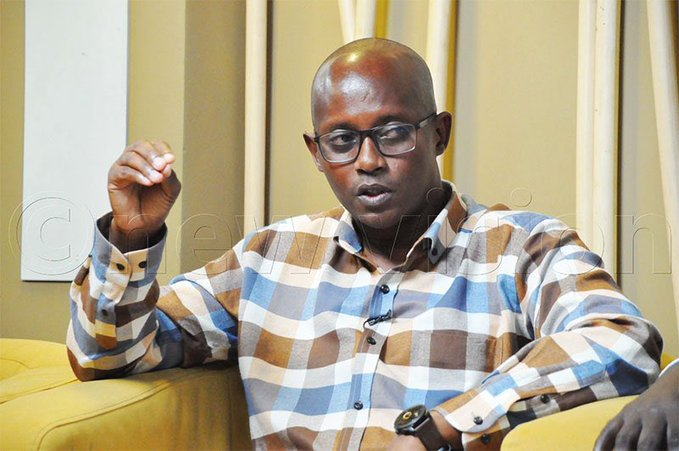
KAMPALA — Uganda has formally ordered the extradition of former Uganda People’s Defence Forces (UPDF) officer and diplomat Michael Katungi Mpeirwe to the United States, where he is wanted to stand trial over an alleged international cocaine-trafficking and military weapons conspiracy.
Justice and Constitutional Affairs Minister Norbert Mao signed a warrant of surrender on September 1, directing the Commissioner General of Prisons to release Katungi to an authorised representative of the US government for transportation to Virginia.
“Michael Katungi Mpeirwe, presently in lawful custody in Uganda, shall be surrendered to the Government of the United States of America,” Mao stated in the warrant. He said Katungi would be taken to the US to “stand trial in respect of the specific offences for which his extradition was requested and authorised.”
The minister also directed police, prisons and other relevant government agencies to facilitate the handover in accordance with Ugandan law and the applicable extradition arrangements.
The order follows a decision by Buganda Road Chief Magistrate Ritah Kidasa Neumbe on August 28, which cleared the way for Katungi’s extradition after rejecting several preliminary objections raised by his defence team.
Katungi, who has been in custody since his arrest in June, is wanted before the US District Court for the Eastern District of Virginia, Alexandria Division.
Three charges
US prosecutors accuse Katungi of participating in a conspiracy involving cocaine trafficking, firearms and material support to a foreign terrorist organisation.
According to the US indictment, the first count alleges conspiracy to distribute and possess with intent to distribute five kilogrammes or more of cocaine, knowing that the drugs were intended for unlawful importation into the United States.
The second alleges conspiracy to possess firearms, including machine guns and destructive devices, in furtherance of a drug-trafficking crime.
The third alleges conspiracy to provide material support or resources to a designated foreign terrorist organisation.
The organisation named in the case is Cartel de Jalisco Nueva Generación (CJNG), a Mexican drug-trafficking organisation that the United States designated a Foreign Terrorist Organisation in February 2025.
US prosecutors allege that Katungi worked with Bulgarian national Peter Dimitrov Mirchev, Kenyan national Elisha Odhiambo Asumo and Tanzanian national Subiro Osmund Mwapinga in an attempt to supply military-grade weapons to the cartel.
The alleged weapons included machine guns, rocket launchers, grenades, sniper rifles, anti-personnel mines and anti-aircraft weapons.
According to the US Department of Justice, the group allegedly obtained an End-User Certificate from Tanzania that was used to conceal the intended destination of a shipment of 50 AK-47 rifles, ammunition and magazines exported from Bulgaria.
Prosecutors further allege that the group planned a much larger weapons transaction valued at about €53.7 million, equivalent to approximately US$58 million, involving weapons such as surface-to-air missiles, anti-aircraft drones and ZU-23 anti-aircraft systems.
The US indictment was unsealed in July 2025 and named all four men as defendants. The US Justice Department said Mwapinga had been extradited to the United States, while Mirchev and Asumo were undergoing extradition proceedings in Spain and Morocco respectively.
Katungi challenged extradition
Katungi has denied the allegations and fought the extradition proceedings in Uganda.
His lawyers challenged the legal procedure used to initiate the extradition case, questioned the authority of government officials involved in the process and argued that he was entitled to diplomatic immunity because of his previous diplomatic service.
Katungi had served as a deputy head of Uganda’s diplomatic mission in Nigeria and later worked as an African Union policy adviser. He also served as director of Diaspora Affairs within the Patriotic League of Uganda (PLU).
Chief Magistrate Neumbe rejected the diplomatic immunity argument, ruling that such immunity applied to diplomatic agents in the receiving state to which they were accredited. Since Katungi had served in Nigeria, the court found that neither Uganda nor the United States was the relevant receiving state for purposes of the claim.
The court also rejected arguments concerning the role of the Director of Public Prosecutions and the Solicitor General in the extradition process.
Importantly, the magistrate said the extradition hearing was not a trial to determine whether Katungi was guilty or innocent, but whether the evidence met the statutory threshold required for him to be committed for extradition.
The court subsequently committed Katungi to prison pending the minister’s decision.
Sovereignty and due process questions
The extradition has generated debate over Uganda’s decision to surrender one of its citizens to face prosecution in a foreign jurisdiction, particularly given Katungi’s former military and diplomatic roles.
The government’s position, however, is that the surrender follows Uganda’s extradition framework and international obligations.
Mao’s warrant states that the handover must be conducted “in accordance with the laws of the Republic of Uganda, the applicable extradition arrangements and any applicable conditions governing the surrender.”
The US request was transmitted to Uganda through diplomatic channels in December 2025. Uganda subsequently considered the request under the Extradition Act and the 1988 United Nations Convention against Illicit Traffic in Narcotic Drugs and Psychotropic Substances.
The warrant does not specify when Katungi will physically be transferred to US custody.
For Uganda, the case now moves from the courtroom phase of the extradition process to the actual implementation of the ministerial surrender order.
For Katungi, the next stage will be a US federal trial in Virginia, where prosecutors will have to prove the allegations against him.
The US Department of Justice has said that each of the defendants faces a mandatory minimum sentence of 10 years and a possible maximum of life imprisonment if convicted, although actual sentences are determined by a federal judge after considering the applicable sentencing guidelines and other factors.
Katungi has not been convicted of any offence, and the allegations contained in the US indictment remain to be proved in court.