
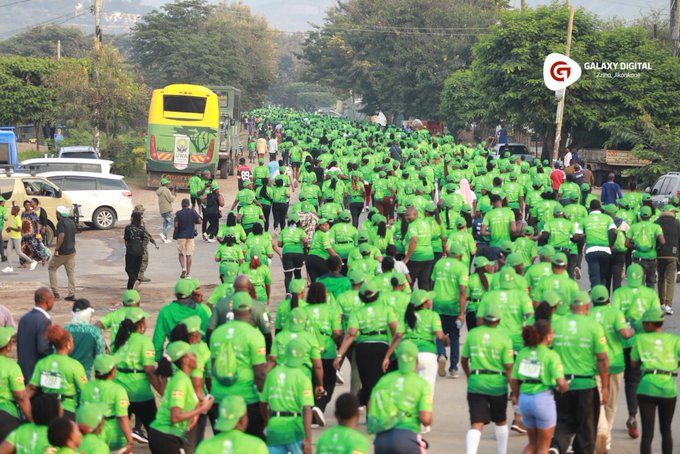
KASESE — About 8,000 runners are expected to take to the roads of Kasese on Saturday as the Tusker Lite Mt. Rwenzori Marathon stages its fifth edition against the backdrop of the Rwenzori Mountains and Uganda’s growing ambitions to turn sport into a tourism industry.
The race, which began in 2022 with a much smaller field, has expanded into one of Uganda’s major mass-participation sporting events, attracting runners from Uganda and dozens of countries.
The 2026 edition is being held on August 22 and features 42km, 21km, 10km and 5km races. The full marathon starts at the Equator inside Queen Elizabeth National Park before heading towards Kasese town and the foothills of the Rwenzori Mountains.
Organisers say about 8,000 runners from 26 countries have registered for this year’s race, with only a few slots remaining ahead of the event.
The growth comes as the marathon enters a new phase after receiving World Athletics Label Road Race status, making it the first marathon in Uganda to receive the international designation and one of only three in East Africa.
The status requires the race to meet international standards covering course measurement, timing, road closures, race operations and elite participation.
For Uganda, the distinction carries significance beyond athletics.
The country has produced some of the world’s greatest distance runners, yet major international road races have traditionally been staged elsewhere. The Rwenzori Marathon is attempting to reverse that geography by bringing international runners to Uganda rather than sending Ugandan athletes abroad.
State Minister for Sports Peter Ogwang has previously said the government wants the race to provide Ugandan athletes with an opportunity to compete for major prizes at home.
“We have seen our children run in London, New York, Amsterdam – but here we haven’t had a product where you can run and perform and win at home,” Ogwang said.
Prize money quadrupled
The organisers have also sharply increased the financial stakes.
The total prize purse has risen from Shs92 million in 2025 to Shs252 million this year.
The winners of the men’s and women’s 42km races will each receive Shs40 million, up from Shs10 million last year. Second place earns Shs20 million, third Shs10 million, while fourth, fifth and sixth receive Shs8 million, Shs6 million and Shs4 million respectively.
The 21km winners will each receive Shs15 million.
Men and women receive equal prize money at every position.
Marathon founder Amos Wekesa said the increased prize money was intended to make Kasese attractive to both Ugandan and international elite runners.
“We want a Ugandan runner in Kasese to know that if they are good enough, there is real money and a real stage waiting for them at home,” Wekesa said.
Running as tourism
The marathon is increasingly being marketed not simply as a sporting event but as a tourism product.
Kasese sits between Queen Elizabeth National Park and the Rwenzori Mountains, giving runners and visitors access to some of Uganda’s most distinctive landscapes and wildlife.
Uganda Tourism Board CEO Juliana Kaggwa said the race provides an opportunity to expose the country’s tourism attractions to an international audience.
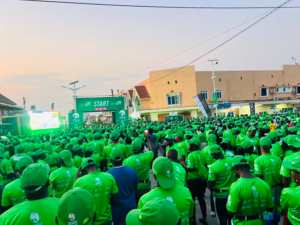
“With over 8,000 participants and tens of thousands of supporters gathering from Kasese, Kampala, and beyond, there is no better backdrop than the southwestern foothills of Mount Rwenzori,” Kaggwa said.
She added that visitors could come for the race but remain to explore Uganda’s wildlife and landscapes.
The marathon organisers similarly describe the event as a destination race, arguing that runners increasingly travel not merely to compete but to experience the places in which races are held.
That model is already producing a wider tourism effect. The marathon’s organisers say runners who come to Kasese often extend their trips to visit Queen Elizabeth National Park, the Rwenzoris, lakes and other attractions in the region.
A race beyond Kasese
The event is also receiving unprecedented international exposure.
For the first time, World Athletics is broadcasting the race live, with about five hours of coverage expected to include the marathon and half marathon through to the awards ceremony. A separate documentary production is also following the race and Uganda’s running and conservation story.
The documentary links Uganda’s running culture in Kapchorwa with Budongo’s forests and the Rwenzori landscape, bringing sport, wildlife and conservation into the same narrative.
Government has also increased its financial backing. In July, the government committed Shs3.7 billion through the National Council of Sports to support expansion of the marathon and its international ambitions.
The marathon organisers have said they eventually want the event to rise through the World Athletics classifications towards Elite and Gold Label status.
For Kasese, the transformation is striking.
A marathon that began in 2022 has become an international event capable of bringing thousands of runners, spectators, media crews and tourists into the district.
The deeper question is whether Uganda can turn such events into durable economic infrastructure rather than annual spectacles.
A race lasts a few hours.
The tourism economy it creates, if properly organised, can last much longer.