



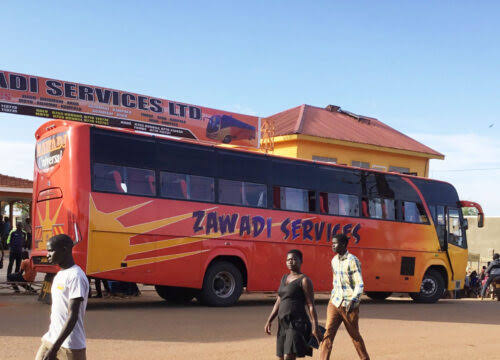
Zawadi Bus Services has suspended all operations after Stanbic Bank directed the company to park its buses over an outstanding loan of about Shs1.7 billion, disrupting passenger and cargo transport in Adjumani and neighbouring districts.
The suspension, announced on Monday, September 14, has left passengers stranded and more than 40 employees facing possible job losses, according to reports by Daily Monitor and Uganda Radio Network.
Zawadi Managing Director Simon Amajuru said the company was complying with a directive from Stanbic Bank to park its buses as the lender seeks to recover part of the outstanding loan.
“Stanbic Bank directed Zawadi Services Ltd to park the buses and recover part of the loan while the balance will remain outstanding to the company,” the company said in a statement.
The outstanding principal is currently about Shs1.7 billion, excluding VAT, according to the company.
Amajuru attributed the financial difficulties largely to the disruptions caused by the COVID-19 lockdowns of 2020 and 2021, which grounded the company’s fleet while interest on its bank borrowing continued to accumulate.
Zawadi borrowed Shs2.857 billion from Stanbic Bank in 2019 to purchase eight new buses. Amajuru said the company subsequently repaid Shs5.742 billion between 2019 and 2025, against an original five-year repayment arrangement that required monthly instalments of Shs83.216 million and total repayments of Shs4.993 billion, including interest and taxes.
The company said its financial position deteriorated during the pandemic because Adjumani, a border district, was unable to resume normal operations until October 2020 and was again affected by the second lockdown between May and October 2021.
According to Amajuru, Stanbic later capitalised Shs1.252 billion in accrued interest and arrears, at one point pushing the loan balance above Shs4 billion.
Buses parked, workers affected
Zawadi subsequently sold seven buses in 2025—three belonging to the bank and four owned by the company—to raise money for loan repayment.
However, Amajuru said prolonged inactivity had caused mechanical deterioration, forcing the company to spend part of the proceeds on rehabilitation of the buses in 2026.
The company has now parked its entire fleet in compliance with the bank’s directive.
The suspension has also affected workers who depended on the company for their livelihoods. Zawadi had 85 employees before the COVID-19 lockdown, while more than 42 are now expected to lose their jobs. The company also acknowledged that some employees have outstanding salary arrears.
Lawrence Logi, a senior bookings officer who joined the company in 2008, said the suspension had left him uncertain about his future.
“I managed to educate all my children with the support of the salary I received from Zawadi. We worked from Monday to Sunday, so there was hardly any time to do other work to earn a living. With this news, we really don’t know where we are going to be,” Logi said.
Christina Abe, an accountant who joined Zawadi in 2009, said she had built her career and supported her children through her employment at the company.
“I have been in Zawadi for 17 years. I am a single mother. I joined Zawadi with a diploma and was able to pursue my bachelor’s degree in accounting. I am the one paying for my children. My firstborn is now a graduate student,” Abe said.
“When we got the news, we felt stranded. I have been based in Kampala for the last 17 years. I own nothing. Where do I start life from? That is my worry and my fear. I am scared,” she added.
Zawadi has operated routes connecting Adjumani to Kampala through Gulu and to Arua through Moyo, as well as services between Kampala and Adjumani. The company had also introduced services to Yumbe through Arua.
Company appeals for government intervention
Zawadi co-owner Emmanuel Amaza said the company’s financial problems were largely a consequence of the COVID-19 disruptions rather than a failure to honour its obligations before the pandemic.
The company has appealed to President Yoweri Kaguta Museveni to intervene by helping it settle the Shs1.7 billion outstanding loan and waiving the associated VAT.
Stanbic Bank had not publicly commented on the matter by the time of the reports.
The shutdown has disrupted one of the key passenger and cargo transport links serving Adjumani and neighbouring districts, with the financial difficulties of a locally owned bus company now spilling over into employment and regional transport.

