



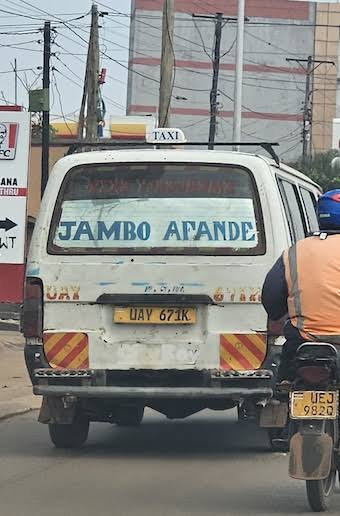
KAMPALA — The Uganda Peoples Congress (UPC) has called on the government to provide alternative public transport as the ongoing crackdown on mechanically dangerous vehicles leaves some commuters facing longer queues and fewer taxis.
The party said it supports the removal of vehicles in Dangerous Mechanical Condition (DMC) from Uganda’s roads but warned that enforcement without a replacement plan could deepen the country’s transport challenges.
The Ministry of Works and Transport, together with Traffic Police, launched a 100-day operation dubbed “Ganyegenya” on August 24, targeting vehicles deemed unsafe, particularly dilapidated 14-seater taxis operating in the Greater Kampala Metropolitan Area.
Police impounded 178 vehicles on the first day of the operation as officers moved to enforce roadworthiness standards.
The exercise has since affected public transport availability in parts of Kampala and surrounding areas, with some commuters reporting longer waiting times at taxi stages. Some operators have also reportedly withdrawn their vehicles from service to undertake repairs, while others have stayed off the roads to avoid impoundment.
As the number of taxis has fallen, some commuters have turned to boda bodas and other alternative forms of transport, which can come at a higher cost.
UPC spokesperson Sharon Arach Oyat said the party does not oppose the government’s road safety campaign, but argued that enforcement should apply to all categories of vehicles.
“We support the removal of dangerous vehicles from our roads, but the exercise must be consistent and comprehensive,” Oyat said.
She said bicycles, boda bodas, tuk-tuks, trucks, lorries, buses, government vehicles and private cars should also undergo mechanical inspections because defects in any vehicle can threaten the lives of road users.
The party is particularly concerned about the potential impact of the crackdown when schools and institutions of higher learning reopen, potentially increasing the number of commuters travelling during peak hours.
Oyat proposed the temporary deployment of institutional buses to ease pressure on the public transport system while taxi operators repair vehicles that have been taken off the road.
“Government should consider temporarily deploying institutional buses to transport commuters as operators work on their vehicles,” she said.
The UPC said the current disruption also exposes a deeper weakness in Uganda’s transport planning: the country remains heavily dependent on road-based public transport despite recurring congestion, inadequate mass transit and a growing urban population.
The party is therefore calling for a comprehensive national transport policy covering road, railway, water and air transport, rather than relying mainly on enforcement exercises to address individual problems.
It has also proposed investment in electric trains and trams as part of a long-term mass public transport system, arguing that Uganda’s growing electricity generation capacity could support electric urban transport.
The party described the Ganyegenya operation as necessary but insufficient on its own.
The Forum for Democratic Change (FDC) and other opposition actors have also raised concerns about transport shortages and increased fares following the removal of taxis from the roads.
Authorities have subsequently moderated enforcement in some areas in an effort to reduce disruption while giving operators time to repair vehicles and comply with safety requirements.
The Ganyegenya operation is scheduled to run for 100 days, with government maintaining that the objective is to improve road safety by removing mechanically unsafe vehicles from public roads.
For UPC, however, the central question is no longer simply whether dangerous vehicles should be removed.
It is what happens to the passenger standing at the taxi stage after the vehicle has been removed.