
Nigeria — Nigerian artist and technologist Malik Afegbua is harnessing artificial intelligence to capture the memories of the elderly and reconstruct Africa’s lost heritage, blending storytelling with digital innovation.
Afegbua recently presented a slideshow to a group of elders to introduce them to AI tools. “They were excited, they were intrigued, they want to learn,” he said. He explained how large language models can assist with storytelling, memory recall, and structuring ideas, and demonstrated how AI can work with photos, videos, and audio recordings to refine stories, generate transcripts, and expand memories into written narratives that could be shared widely.
The interviews began by exploring daily life before delving into personal experiences. Afegbua was cautious when approaching sensitive subjects like the Nigerian Civil War (1967–1970). “The majority were hesitant — some said outright they didn’t want to talk about it,” he recalled. He plans to address the war through interviews with people personally affected, but emphasized: “The trauma is still very present. We never push.”
Afegbua’s previous project, “The Elders Series” (2023), used AI to generate images of older Africans on the catwalk, gaining international attention. His current initiative, LegacyLink, aims to preserve the knowledge of living people, while another project, ReMemory, seeks to recreate African heritage sites that have been lost, destroyed, or are inaccessible.
For ReMemory, Afegbua relies on historical records and academic studies to recreate sites digitally. Users will eventually be able to explore them on phones, computers, or via virtual reality. One inspiration was his VR film of the Kofar Mata dye pits in Kano, Nigeria, which have operated for five centuries and are renowned for indigo-dyed cloth. “In case it does die out,” he said, he documented the pits digitally, especially as insecurity in the region makes access difficult.
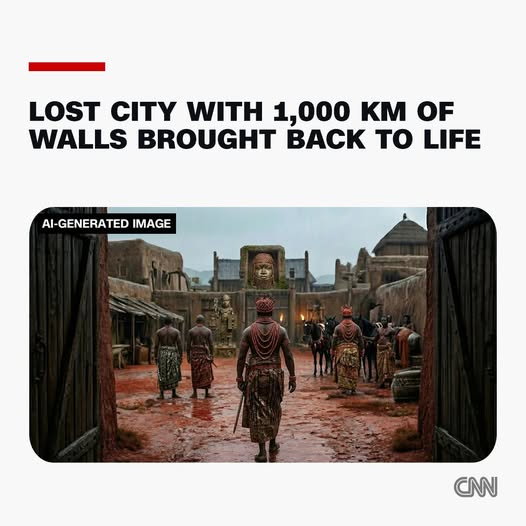
Next on his list is the virtual reconstruction of the ancient walls of Benin City, built between the 7th and 14th centuries. These 18-meter-tall earthworks once encircled the city for over 1,200 kilometers (746 miles). “Though there are diagrams and descriptions of the walls, there are gaps in the historical records, but I am trying to get as close as I can,” Afegbua said.
Both LegacyLink and ReMemory reflect Afegbua’s mission: “Restore languages, artifacts, symbols … so you could actually experience it.” By combining AI, history, and culture, he is creating digital bridges between Africa’s past and present, ensuring stories and heritage endure for future generations.