
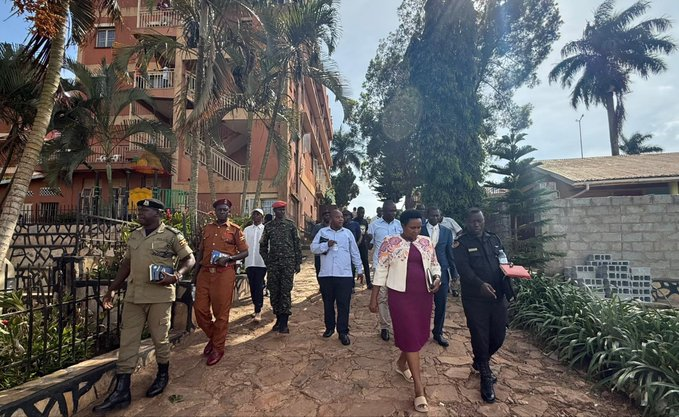

The Judiciary of Uganda has stepped up preparations for its first-ever Mobile High Court session, scheduled to commence on April 13, 2026, in Ggaba, Makindye Division.
The special court sitting will take place at the Ggaba Community Church grounds, marking a historic milestone in Uganda’s justice system. The initiative follows the recent issuance of the Constitution (Operation of Mobile Courts) (Practice) Directions, 2026, under Legal Notice No. 1 of 2026 by the Chief Justice, providing a formal legal framework for courts to operate outside traditional court premises.
On Thursday, the Deputy Registrar of the Criminal Division, Samuel Twakyire, chaired a preparatory meeting in Ggaba to coordinate logistics and security arrangements for the session. The meeting brought together key stakeholders, including representatives from the Uganda Police Force, Uganda Prisons Service, local leaders, and Judiciary officials.
The Mobile High Court session will handle the high-profile case of Christopher Okello Onyum, the prime suspect in the Ggaba toddler killings. He faces four counts of murder and was recently committed to the High Court for trial. The case will be presided over by Alice Komuhangi Khaukha.
As part of the preparations, officials inspected three সম্ভাব্য venues before selecting the church grounds, with security emerging as a key consideration. Authorities said access to the venue will be strictly regulated through a categorisation system, covering groups such as religious leaders, court staff, affected families, security agencies, media, and local leaders.
Officials also discussed measures to manage the expected large turnout while ensuring order and safety throughout the proceedings.
To promote transparency and public participation, the Judiciary announced that the session will be streamed live on social media, allowing members of the public to follow the trial remotely.
The Mobile High Court initiative forms part of the Judiciary’s broader transformation agenda aimed at improving access to justice, expediting case disposal, and addressing cases of significant public interest within affected communities.