



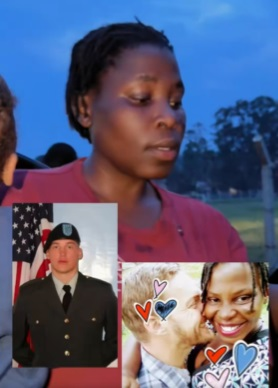
A Ugandan woman has appealed to the public to help trace a man she identifies as an American Army soldier whom she says is the father of her two children.
The woman’s appeal has circulated on social media, accompanied by photographs and video footage showing her with the children near an open vehicle.
She is asking anyone who may recognise the alleged father or know his whereabouts to share the information with him, saying she wants him to come forward and help the children.
The appeal has generated an emotional reaction online, with some viewers expressing sympathy for the children and questioning how a father could remain absent from their lives.
One doctor responding to the footage asked how anyone could leave behind children he described as adorable, reflecting the broader reaction from social media users who urged the alleged father to take responsibility.
However, the identity of the alleged father and the circumstances surrounding the children’s paternity have not been independently verified. The circulating footage and the woman’s account alone do not establish that the man being sought is a US Army serviceman or that he is the biological father of the children.
The case has also prompted suggestions that the woman should pursue formal channels rather than rely solely on social media.
US Embassy urged as possible avenue
Some online users have advised the woman to contact the United States Embassy in Uganda in Kampala to establish whether the children could qualify for US citizenship through their alleged American father.
US Embassy guidance confirms that children born outside the United States may acquire US citizenship at birth in circumstances where at least one parent is a US citizen, although specific legal requirements must be met. The embassy says documentation and evidence establishing the relationship between the child and the US-citizen parent are among the matters considered when applying for a Consular Report of Birth Abroad.
Citizenship, however, is not automatic simply because someone claims that a child’s father is American.
The embassy’s guidance means the children would need to establish the relevant facts, including the father’s US citizenship and the required biological and legal relationship. The applicable requirements can also depend on the parents’ circumstances and the amount of time the US-citizen parent spent in the United States before the child’s birth.
That makes identification of the alleged father particularly significant.
If he is located and acknowledges paternity, the family could pursue the appropriate legal and consular procedures. If paternity is disputed, it may have to be established through formal legal processes rather than through social-media claims.
The case illustrates a recurring problem in an age when private family disputes can quickly become public appeals. A photograph can travel across borders in minutes; establishing who a person is, whether he is a soldier, whether he is the father and what legal obligations follow can take considerably longer.
For now, the woman’s appeal remains just that: an appeal for help tracing an alleged American soldier and establishing his relationship with her two children.
Until the man is identified and the claims are independently confirmed, neither his identity nor the children’s eligibility for US citizenship should be treated as established fact.