



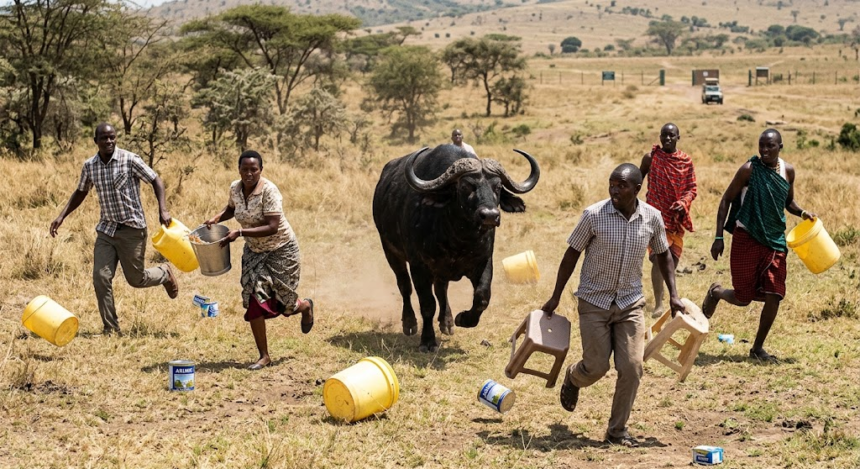
Kenyans have reportedly turned up at a wildlife park with buckets and milking jelly following President William Ruto’s proposal to introduce buffaloes into the country’s dairy industry, prompting a humorous warning from wildlife authorities.
The Kenya Wildlife Service’s Aberdare National Park posted a warning on Facebook on October 12, telling Kenyans not to come into the park carrying buckets and Arimis milking jelly to milk wild buffaloes, according to a report by Tuko.co.ke published on October 13.
The online frenzy followed remarks by Ruto at the Agriculture and Food Systems Transformation Summit in Nairobi on October 8 and 9, where he proposed exploring the introduction of domesticated water buffaloes and improved camel breeds to increase milk production amid shortages.
“I hear buffaloes also produce a lot of milk. In India, they are actively working with buffaloes. If others are milking them, why shouldn’t we?” Ruto said.
His comments have since inspired social media skits and memes depicting Kenyans attempting to milk wild buffaloes, with some videos showing people fleeing from charging animals.
However, the animals Ruto was referring to are domesticated water buffaloes commonly raised for milk in countries such as India, not the African Cape buffaloes found in Kenya’s national parks.
The two are different species, and the president’s proposal was to explore commercial dairy production rather than milk wild animals.
According to the report, the park’s rangers responded in Swahili: “Mbona mnakuja kwa park na ndoo na Arimis?” — meaning, “Why are you coming to the park with buckets and Arimis?”
The warning added that the animals were wild buffaloes, unlike those in India, and advised visitors to abandon their milking plans before the animals turned on them.
There is, however, no independently verified evidence in the available reporting establishing how many people actually visited the park intending to milk buffaloes. The reported visits should therefore be distinguished from the much wider wave of online jokes.
Milk shortage behind the jokes
The controversy comes as Kenya struggles with declining milk supplies and rising prices.
The Star reported that formal milk deliveries to processors fell from 84.4 million litres in June to 81.3 million litres in July and 75 million litres in August. The decline has been attributed to prolonged drought, deteriorating pasture and rising animal-feed costs. Read The Star’s report.
Ruto’s proposal has also drawn political criticism. Former Deputy President Rigathi Gachagua questioned the government’s approach, arguing that it should address the challenges facing existing dairy farmers rather than focus on importing alternative livestock. Read Gachagua’s response.
Kenyan social media users have turned the debate into memes featuring people fleeing charging buffaloes, fictional milk brands and jokes about being sent to collect milk from dangerous wild animals.
The distinction matters because African Cape buffaloes (Syncerus caffer) are wild animals that can seriously injure or kill people, while the domesticated Asian water buffalo (Bubalus bubalis) is raised commercially for milk and meat. Kenya’s wildlife authorities warn that African buffaloes can be unpredictable and dangerous, particularly when threatened or surprised. Kenya Wildlife Service buffalo safety facts.
Ruto’s proposal is to explore whether domesticated water buffaloes could help diversify Kenya’s dairy production. Whether the plan proves commercially viable will depend on suitable breeds, animal-health safeguards, feeding and water requirements, and the cost of establishing a new dairy system.
For now, Kenyans have found an unlikely source of comedy in a serious economic problem: a milk shortage has turned the question of where milk comes from into a national joke about who might end up being milked instead.

