



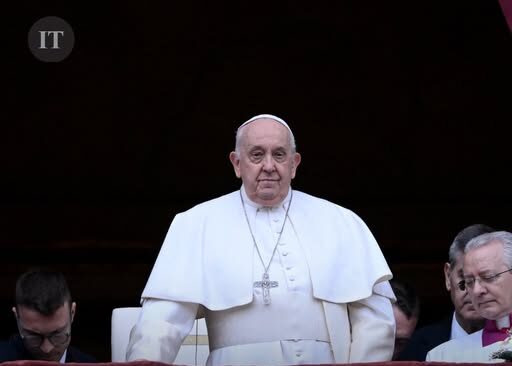
The late Pope Francis believed he had encountered the devil on three occasions and experienced a two-year spiritual crisis between 2021 and 2022, according to excerpts from his private diaries published this week.
The revelations offer an unusually personal account of the late pontiff’s inner struggles, including his fears, spiritual experiences and difficulties exercising authority over the Catholic Church during his 12-year papacy.
The 160-page book, titled The Private Diary of Pope Francis, was released on November 24, 2026, in five languages. It contains selected entries from a personal planner in which Francis recorded his thoughts between December 1992, when he was an auxiliary bishop in Buenos Aires, and August 18, 2024, about eight months before his death in April 2025.
The collection was compiled by Cardinal Víctor Manuel Fernández, a close collaborator of Francis and head of the Vatican’s Dicastery for the Doctrine of the Faith, who added commentary to the diary entries.
According to the publication, Francis described three occasions when he believed he had seen the devil, including one encounter during a meeting with Vatican officials in January 2021.
In an entry dated January 24, 2021, he recalled seeing and hearing a figure whose voice he described as having a powerful raspiness.
“The Lord granted me an opportunity to leave that meeting, and he thus freed me,” Francis wrote.
The diaries also reveal that the former pontiff experienced what Cardinal Fernández described as perhaps the worst period of spiritual temptation in his life, beginning in 2021 and extending into 2022.
Francis described the period as one marked by internal darkness, pressure over decisions, difficulties governing the Church and a struggle against the temptation to manipulate people through the power of his office.
A December 2022 entry described the experience as a mixture of “governance issues, pressure regarding decisions to make, and aridity and desolation.”
Cardinal Fernández said the pope eventually recognised the crisis as the worst spiritual trial that had tormented him. He particularly struggled with the temptation to become what he described as a “puppeteer” who uses and manipulates people for personal convenience.
In his commentary, Fernández explained that Francis’ struggle was not simply about the demands of leadership but also about resisting the temptation to exercise power as though he were above everyone else.
Vision of hell during Church abuse scandal
The diaries also recount an experience Francis associated with the Catholic Church’s sexual abuse scandals in Chile.
In 2018, the pope faced intense criticism after initially defending a Chilean bishop accused of covering up sexual abuse. He later acknowledged that he had mishandled the matter and apologised, before ordering an investigation into the allegations.
In a diary entry dated June 7, 2018, Francis wrote that he had seen the entrance to hell the previous night.
“I peeked in to look a little, and it terrified me,” he wrote, adding that he grabbed his rosary as a weapon.
He also recorded his distress over the revelations in Chile, writing in a later entry: “It was hard for me to admit what happened in Chile; I didn’t think it was so serious.”
The diaries suggest that the scandal was not merely a governance crisis for Francis but also a profound spiritual struggle.
Prayer and spiritual recovery
Fernández says Francis eventually emerged from his 2021–2022 crisis through a deeper surrender to God and a rejection of the desire to control others.
The cardinal links that spiritual transformation to two of Francis’ later major Church documents: C’est la confiance, published in 2023, and Dilexit nos, his 2024 encyclical on the human and divine love of Jesus Christ.
The diaries also reveal the pope’s deep devotion to the Virgin Mary and St Joseph. He regularly placed handwritten prayer requests beneath a statue of St Joseph, a practice he believed helped him avoid relying entirely on his own strength.
In an October 2023 entry, Francis recalled visiting Fatima in Portugal, where he prayed before an image of the Virgin Mary.
“I looked at her and she spoke to me,” he wrote.
According to Fernández, the diaries provide a rare account of a pope’s private spiritual life. Most modern pontiffs have traditionally directed that their personal papers be destroyed after their deaths.
The last pope whose diaries were published posthumously was John XXIII, who died in 1963.
The publication therefore offers an unusual historical record of the private religious experiences of a man who led more than a billion Catholics, while revealing the personal struggles behind the public image of one of the most recognisable religious leaders of the 21st century.

