



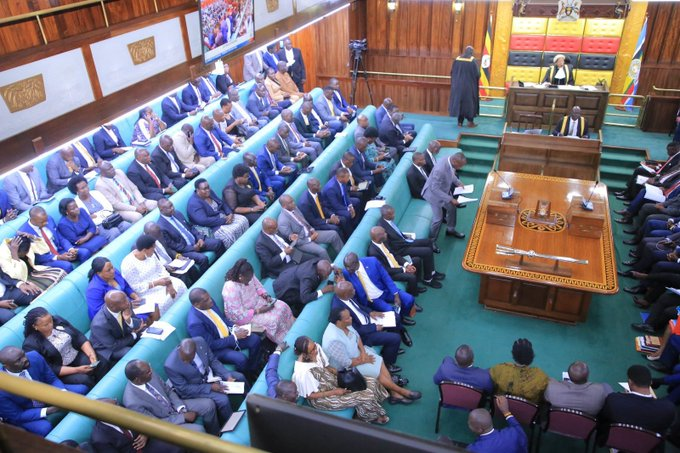
Uganda’s Parliament on Tuesday debated the contentious Protection of Sovereignty Bill amid tight security, with roads leading to the precinct sealed off by police and military, echoing restrictions last seen during the 2017 age limit debate. Reports from Daily Monitor indicated that access to Parliament was limited for both Members of Parliament (MPs) and staff ahead of the afternoon sitting.
The bill, tabled in April by State Minister for Internal Affairs David Muhoozi, seeks to require individuals and organisations receiving more than UGX 400 million annually from foreign sources to register as “foreign agents” unless cleared by the government. Violators could face penalties of up to 20 years in prison.
Heated debate in the House
During the plenary session, Speaker Anita Among dismissed claims that a revised version of the bill had been secretly introduced, insisting that any changes should have formally been brought to her attention.
“I am the custodian of the law in this House. We don’t have a new bill. If the President wanted to change something, he ought to have informed me,” Among said during the session, according to coverage by UBC Uganda.
However, the Leader of the Opposition Joel Ssenyonyi strongly objected to the bill’s progression, arguing that the version presented differed materially from the original draft tabled earlier.
Ssenyonyi called for the withdrawal of the bill, warning that Parliament risked passing legislation it had not adequately scrutinized.
Concerns over freedoms and economy
Opposition MPs and civil society actors have warned that the bill could significantly restrict civic space by targeting non-governmental organizations and individuals reliant on foreign funding. Critics argue it may stifle freedoms of association and expression.
Economic concerns were also raised during earlier consultations, with Bank of Uganda Governor Michael Atingi-Ego cautioning that the law could undermine investor confidence and disrupt financial flows into the country. These fears have been amplified by recent security concerns, including a reported break-in at the central bank.
Government defends the bill
Supporters, largely from the ruling National Resistance Movement (NRM), defended the legislation as necessary to safeguard Uganda’s sovereignty and protect national interests from undue foreign influence.
Some MPs backing the bill argued that similar laws exist in other jurisdictions and that Uganda must regulate external funding to prevent interference in domestic affairs.
Committee recommendations and likely passage
Parliamentary committees had earlier recommended amendments to the bill ahead of its second reading, aiming to address concerns raised by stakeholders. However, with the NRM’s numerical strength in the House, the bill’s passage appears likely despite resistance from opposition MPs and sections of the public.
Speaker Anita Among directed that the proposed amendments be formally considered, setting the stage for a vote in subsequent sittings. Despite the controversy and public opposition, the prevailing sentiment in Parliament suggested that the bill would proceed to the next legislative stage, backed by the ruling party’s majority.
The debate underscores ongoing tensions between national security considerations and democratic freedoms, with the final outcome expected to have far-reaching implications for civil society and Uganda’s economic landscape.

