



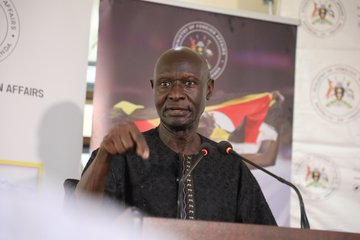
Uganda’s Olara Otunnu has emerged as Africa’s only remaining candidate in the race for the next United Nations Secretary-General following the withdrawal of former Senegalese President Macky Sall.
Sall announced his withdrawal from the contest, saying he hoped the decision would help the UN Security Council reach consensus on a candidate to succeed the current Secretary-General.
His exit leaves Otunnu, a former UN Under-Secretary-General and Uganda’s former ambassador to the United Nations, as the remaining African contender in the race, placing renewed attention on his bid to lead the global organisation.
The development is a setback for Africa’s hopes of securing the next UN leadership, with the continent having sought a stronger role in determining who succeeds the current officeholder.
Otunnu brings extensive experience in international diplomacy and the United Nations system. He served as UN Under-Secretary-General and Special Representative for Children and Armed Conflict from 1997 to 2005, a role in which he advocated for the protection of children affected by armed conflict.
He also served as Uganda’s Permanent Representative to the United Nations and was Foreign Affairs Minister in the government of President Yoweri Kaguta Museveni from 1985 to 1986.
The Secretary-General is appointed by the UN General Assembly upon the recommendation of the Security Council. The council’s five permanent members — China, France, Russia, the United Kingdom and the United States — hold veto power, making their agreement central to the selection process.
Sall’s withdrawal could reshape the competition and the diplomatic negotiations surrounding the appointment. His stated hope that his exit will facilitate consensus highlights the importance of support among Security Council members in determining the next UN chief.
For Otunnu, the departure of the Senegalese candidate leaves him as Africa’s remaining contender, although his prospects will depend on the support he can secure among Security Council members and the wider UN membership.
The contest is therefore a test not only of individual candidates but also of Africa’s ability to translate its demand for representation into the diplomatic backing required to secure the world’s top multilateral office.

