



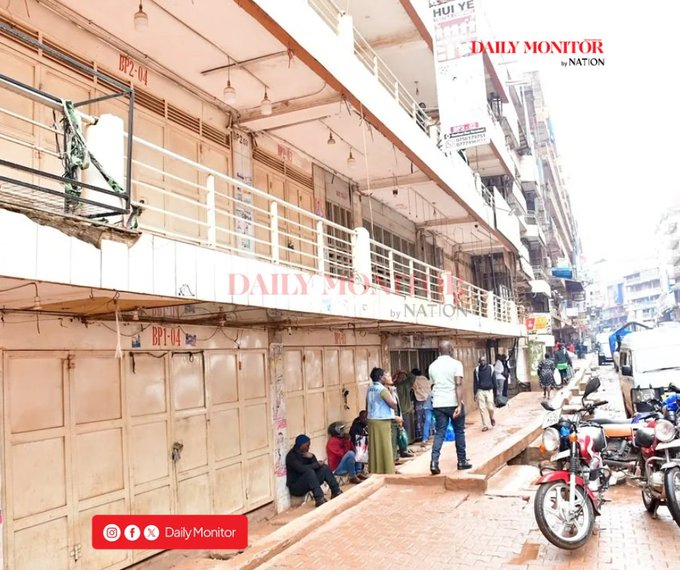
KAMPALA — Traders in Kampala’s Central Business District on Tuesday closed their shops and gathered outside their business premises as a sit-down strike began in protest against high taxation, delays in clearing imported goods and rising costs of doing business.
The traders are demanding government intervention, calling on the Ministries of Finance and Trade, as well as Parliament, to review and amend laws governing the trading sector to create a more favourable business environment and support economic growth.
The industrial action, organised by the Kampala City Traders Association (KACITA), is part of a planned month-long nationwide shutdown targeting what traders describe as excessive tax assessments, costly customs procedures and other operational challenges.
Traders say the Uganda Revenue Authority (URA) has imposed high tax valuations on imported goods, while delays in clearing cargo have left businesses accumulating storage charges and struggling to replenish their stocks.
They have also raised concerns about high rental costs, arguing that the combined pressure of rent, taxes and other operating expenses is making it increasingly difficult for businesses, particularly small traders, to survive.
The protest follows unsuccessful engagements between KACITA and URA over taxation, customs clearance delays, enforcement of the Electronic Fiscal Receipting and Invoicing Solution (EFRIS) and changes to cargo clearance procedures.
A meeting between the two sides on November 10 collapsed after traders objected to a requirement to surrender their mobile phones before entering the meeting. URA later blamed what it described as disruptive individuals for frustrating the engagement.
A fresh meeting convened by URA for Monday, November 16, also failed to take place after KACITA declined the invitation, citing short notice and prior commitments among its leaders.
Finance Minister Henry Musasizi has since called a meeting involving URA and KACITA for Thursday, November 19, at the Ministry of Finance headquarters in Kampala to discuss the traders’ grievances and seek practical solutions.
However, the strike has exposed divisions within the business community. The National Entrepreneurs and Traders Association (NETA Uganda) has distanced itself from the shutdown, arguing that dialogue with URA would be a better way to resolve the dispute.
Landlords have also urged traders to keep their businesses open, warning that closures would deepen their financial losses because rent, loan repayments, salaries and other obligations would continue to fall due.
KACITA has maintained that the action is intended to pressure government to address the concerns affecting traders and improve the conditions under which businesses operate.
The standoff comes more than two years after a traders’ strike in April 2024 over taxation and EFRIS disrupted business in parts of Kampala and prompted intervention by President Yoweri Kaguta Museveni.

