



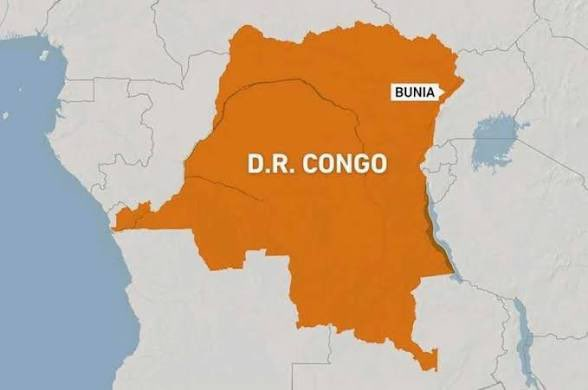
The Ebola outbreak in the Democratic Republic of Congo (DRC) has reached 12,021 confirmed cases and 5,904 deaths, as insecurity continues to disrupt response operations, while a Kenyan court has halted further work on a United States-backed quarantine facility over failure to comply with constitutional requirements for transparency and public participation.
The outbreak, caused by the Bundibugyo strain of Ebola, has spread to eight provinces since it was declared in May 2026, according to figures released by health authorities and published by the European Centre for Disease Prevention and Control (ECDC) on November 26.
Ituri remains the hardest-hit province, accounting for 8,140 confirmed cases and 3,843 deaths. North Kivu has recorded 3,181 cases and 1,779 deaths.
Other affected provinces include Haut-Uele, Tshopo, South Kivu, Bas-Uele, South Ubangi and North Ubangi. In total, 69 health zones across the eight provinces have reported infections.
The outbreak has been complicated by insecurity, particularly in Ituri, where fighting has interrupted medical response activities and forced health workers to relocate.
The Associated Press reported that fighting near a hospital in the province trapped health workers for several days, forcing the evacuation of a group that included World Health Organisation personnel and Congolese health officials.
The violence has disrupted contact tracing, treatment and access to affected communities, raising concerns about the ability of health teams to contain transmission.
The Bundibugyo strain is particularly challenging because there is currently no approved vaccine or specific treatment for it. Health authorities are relying on early detection, isolation, supportive care and contact monitoring to limit infections.
The ECDC reported that 3,332 patients had recovered by November 25, while 1,092 were hospitalised in isolation.
The crisis has also raised concerns in neighbouring countries following cross-border transmission. Kenya recorded nine cases, including two deaths, after an imported infection in October involving a traveller who had arrived from Congo through Uganda. All the remaining patients recovered, and no new cases had been reported since October 19.
Kenyan court halts facility works
Meanwhile, Kenya’s High Court on Thursday ruled that the government violated constitutional requirements when it allowed the construction of a US-backed 50-bed Ebola quarantine facility at Laikipia Air Base near Nanyuki without adequate public participation and disclosure of the agreement with Washington.
Justice Patricia Nyaundi ordered that further works on the facility be halted until the government discloses the details of its agreement with the United States and fulfils the requirements for public participation.
The judge said residents of Laikipia County had been excluded from decisions affecting their community.
“They are aware that the decisions affecting their community are being made and implemented, yet they have been denied any meaningful opportunity to know, interrogate or participate in those decisions,” Nyaundi said in her ruling.
The facility was designed to quarantine people exposed to Ebola, including American citizens. Seven US aid workers who had been in the DRC assisting with the outbreak response were quarantined there in July.
The project had triggered protests among residents, some of whom feared that hosting people exposed to the virus could put the surrounding communities at risk.
The dispute had previously reached court in May, when construction was temporarily suspended. Health Minister Aden Duale was later found in contempt over failure to comply with the earlier orders. He subsequently told the court that he had directed an immediate halt to construction and related activities.
The Kenyan government had defended the facility as part of its preparedness measures and cooperation with the United States in responding to public health emergencies.
The latest ruling does not change the scale of the outbreak in Congo, but highlights the legal and political challenges surrounding regional efforts to contain the disease.
As Congo struggles to reach communities affected by violence, the developments in Kenya underline the need for emergency health measures to be accompanied by public accountability, transparency and cooperation across borders.

