



By Fortunate Kagumaho
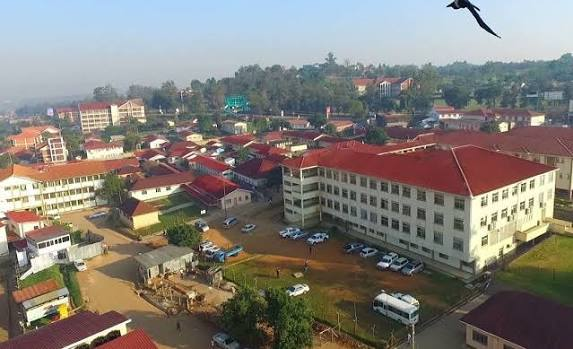
Mbarara Regional Referral Hospital may be in the headlines, but replace the name with almost any public hospital in Uganda and the story will probably remain the same, if not worse.
If you fall sick in Uganda, bambi, come prepared, not only for the illness but also for the system waiting to receive you. Do not arrive with only your National ID and referral letter. Bring cash, lots of it. Bring mobile money, medical insurance and, where possible, a relative working abroad. Better still, bring all four.
In today’s Uganda, sickness is not merely a medical emergency. It is also a financial examination, and the patient is expected to pass before treatment begins.
The first rule is simple: if you are a muntu wa wansi, the ordinary Ugandan, try not to fall sick. The second is even simpler: if sickness insists on finding you, please avoid needing a scan. In this banana republic, serious illness has quietly become a luxury.
The rest of us play a different game. We arrive at a government hospital praying that today’s shortage is not medicine, oxygen, gloves, electricity or a doctor. Sometimes, if you are particularly unlucky, it is all five.
The Inspector General of Government’s findings at Mbarara Regional Referral Hospital are disturbing, but hardly surprising. The CT scanner had reportedly been idle since June 2025, while digital X-ray services were affected by expired films. Wards were overcrowded, some patients slept in tents, and others were reportedly admitted beneath hospital beds.
In our famously inventive public service, even the floor has become admission space.
Patients seeking MRI, CT scan and X-ray services reportedly paid between Shs200,000 and Shs750,000. One patient said he had paid Shs500,000, plus another Shs250,000 for a blood test, and still waited three weeks for care.
For the muntu wa wansi, Shs750,000 is not spare money. It is rent, food, school fees and, for some families, the small capital keeping a household alive. Yet the patient paid it and still waited.
At that point, satire begins to surrender because the facts have already written the joke, and the patient is the punchline.
The headline may read Mbarara Regional Referral Hospital, but replace the name with almost any other public hospital in Uganda and the story will still fit. The beds may be fewer, the equipment older and the shortages worse, but the script remains painfully familiar: different district, different ward, same families waiting for the state to arrive.
This is not just another hospital to me. It is where my mother lay critically ill.
Mbarara Regional Referral Hospital serves millions of people across south-western Uganda and beyond. Yet, at the time, we were told that it had only four Intensive Care Unit beds, and only three were functional.
My mother was unconscious, intubated and receiving emergency dialysis, but we were told that she did not meet the criteria for admission to the ICU. After rounds of telephone calls, arguments and desperate pleading, we mobilised people of goodwill who were prepared to raise whatever amount was needed to secure her a bed.
We were not trying to purchase special treatment. We were trying to purchase hope.
The answer remained the same: she did not meet the criteria. Of course, we understood the deeper truth. There was no bed. We would have accepted an extra one in a corridor if it offered her even the smallest chance.
The advice was to wait in the emergency ward, alongside other critically ill patients lying on the floor, until an ICU bed became available.
There are moments when satire quietly leaves the room. You stop asking whether the system is broken and begin asking whether your loved one will outlive it.
Since then, the phrase “capacity constraint” has sounded less like policy language and more like a threat. This is bigger than broken machines, inadequate staffing and limited bed capacity. These are mothers, fathers and children waiting for a health system that keeps insisting it is merely experiencing “challenges.”
Then comes the familiar government ritual. An official visits and expresses shock. A report is requested, a committee is appointed, and the committee travels, collects per diem and returns with recommendations. The recommendations are safely filed away, where the file may eventually receive better care than the patient.
Months later, another official visits another hospital and rediscovers the same crisis. We appear determined to continue discovering what Ugandans have been living through for years.
Sometimes one wonders whether Uganda is governed or merely reviewed.
George Orwell would recognise the arrangement immediately. In Animal Farm, sacrifice is demanded most loudly from those who receive the least, while some citizens remain more equal than others. Health workers are told that medicine is a calling, patients are told to be patient, and taxpayers are told to understand because resources are limited.
Only the powerful are rarely asked to understand without an allowance.
The public health system now appears to operate on one guiding principle: do not become seriously ill. You may find the doctor but not the medicine, the medicine but not the machine, or the machine only to discover that it has not worked for months. Ask why and you may be directed to another desk, another queue and another officer attending a workshop on improving access to healthcare.
You may leave understanding procedure far better than treatment.
Those with insurance go to private hospitals. Those with savings empty them. Those with land consider selling it, while those with relatives abroad begin making urgent telephone calls. The muntu wa wansi waits in a corridor, beneath a tent or beside a broken machine, hoping healthcare will once again become a public service rather than a luxury product.
We are regularly reminded that treatment in government hospitals is free. Technically, yes. The consultation may be free, but the medicine is not. The scan is not. Transport is yours, food for the caregiver is yours, and sometimes even basic medical supplies are yours.
Perhaps “free healthcare” now means that government is free from providing what makes healthcare work.
When the system fails, public anger usually lands on the nearest person in a white coat. The nurse is called rude, the doctor absent and the intern uncommitted. Some complaints are justified. Extortion, negligence and mistreatment of patients should never be excused.
However, the health worker standing before you did not write the national budget, fail to repair the scanner or approve the latest foreign benchmarking trip. She is trying to survive the same Uganda as the patient. Her landlord does not accept patriotism, the supermarket does not accept sacrifice, and the fuel station does not offer discounts because she spent the previous night keeping strangers alive.
Yet we expect health workers to survive on all three.
We call medicine a calling whenever it is time to avoid properly paying the people who practise it.
Apparently, landlords also recognise callings.
Then there is the matter of national priorities. Publicly reported figures place a Member of Parliament’s basic monthly salary at about Shs6.1 million, with housing and mileage allowances pushing the monthly package beyond Shs30 million before other benefits are considered. An entry-level government medical officer earns about Shs5 million, while medical interns have historically depended on an allowance of roughly Shs1 million a month.
The person trying to save your life earns a fraction of what the person debating whether saving it is affordable receives.
This is not an argument against paying Members of Parliament. Representation costs money, constituencies are large, and public officials should be compensated fairly.
But fairness requires a mirror.
What moral authority does a well-cushioned state have to preach sacrifice to exhausted health workers?
Medical interns can apparently eat clinical experience. Exposure will pay the rent, while patriotism will cover transport home after a 36-hour shift.
Budgets are moral documents. They reveal what a country values, what it protects and whose suffering it is prepared to tolerate. We are repeatedly told there is no money for interns, medicines, recruitment or equipment, but the full sentence is rarely spoken: there is no money for that.
Money has never really disappeared. It has simply learnt where it is most comfortable. It is remarkably at ease around convoys, conferences, workshops, foreign travel, launches, furnished offices and iPads, including, naturally, the training required to teach officials how to use them.
It becomes strangely uncomfortable around hospital pharmacies.
Money is not missing. It has preferences.
That is why corruption is never merely an accounting problem. A stolen shilling becomes a missing drug, an unfuelled ambulance, an unrepaired scanner or a nurse who was never recruited. The absence it leaves behind may have a bed number, a patient’s name and, sometimes, a burial date.
There is an old saying that a fish rots from the head down. Uganda’s health crisis does not begin with the nurse at reception. Leadership sets budgets, determines priorities, oversees procurement and decides what can wait.
Leadership also has the privilege of flying over the consequences.
When seriously ill, many of those responsible for public healthcare will never queue where the muntu wa wansi queues. They have private hospitals, comprehensive insurance and foreign referrals. The muntu wa wansi has a corridor, a tent and a request to remain patient.
Leadership without shared consequences slowly loses moral authority. You cannot ask citizens to trust a system from which the powerful routinely escape. You cannot preach patience from the fast lane or promise heaven and earth during campaigns, only to offer the voter a tent when illness comes.
The crisis at Mbarara Regional Referral Hospital is therefore not merely about broken equipment, questionable charges or overcrowded wards. It is about a broken covenant between the citizen and the state.
Ugandans pay taxes, obey laws and vote. When illness comes, they should find a functioning health system, not a fundraiser, a maze, an apology or a tent.
We have spent years celebrating the resilience of Ugandans. Perhaps it is time to admit that resilience was never meant to become government policy.
So, if you fall sick in Uganda, bring your National ID, referral letter, cash, insurance, patience and prayer.
But above all, bring your own miracle.
Because somewhere tonight, another family is standing beside another hospital bed, hoping that one becomes available before their loved one runs out of time.

