



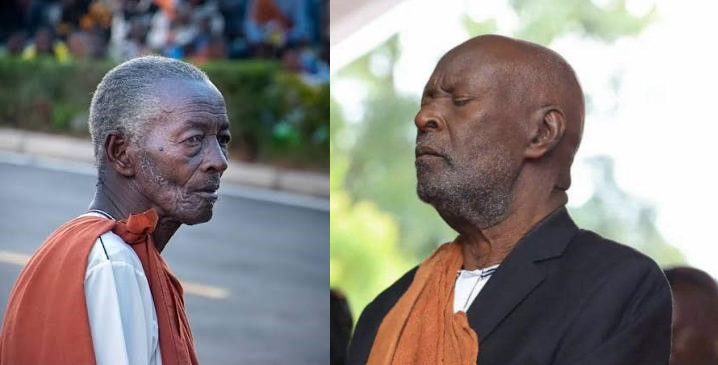
KAMPALA — Two words that, until a few days ago, would have sounded like the private vocabulary of a royal court have suddenly entered Uganda’s national conversation: Omusuuga and Omusuuna.
They are being repeated on social media, television and radio as Uganda follows the death and burial of Omukama Oyo Nyimba Kabamba Iguru Rukidi IV and the turbulent transition that has followed.
But behind the trending words are two men occupying very different positions in one of Uganda’s oldest surviving cultural institutions.
One stands at the centre of royal authority and succession.
The other stands at the threshold between death and the next reign.
Because Tooro’s monarchy was never simply a man sitting on a throne.
Who is the Omusuuga?
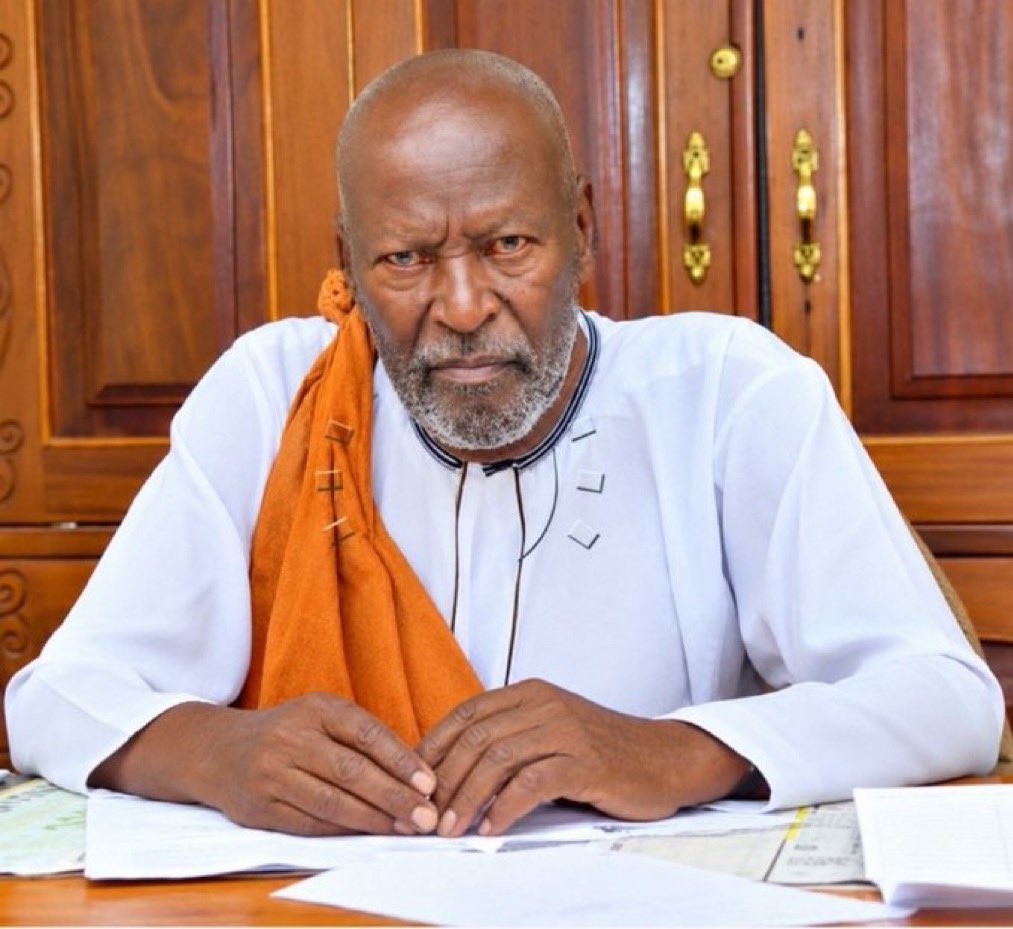
Omusuuga Charles Kayondo Kamurasi, 80, is the head of the Babiito royal clan, the lineage from which the Tooro kings trace their ancestry. He is also an uncle of the late King Oyo and, according to Daily Monitor, was involved in Oyo’s life from the time he was born until his death.
His title has suddenly become one of the most searched and discussed words in Uganda because of the role his office plays during the death of a king.
The Omusuuga is not simply an “assistant king”, as Kamurasi himself has rejected the description.
He is the head of the royal clan.
Kamurasi told Daily Monitor that traditionally the Tooro monarchy revolves around three important pillars: the King, the Musuuga and the Batebe, or princesses. His responsibilities include advising the king on cultural matters and administration, coordinating the royal clan and participating in the installation of a new monarch.
The Omusuuga holds sweeping cultural authority that operates independently of politics.
The Guardian of Lineage: He ensures that the customs of the Babiito royal clan are strictly upheld.
Power of Succession: When a King passes away, the Omusuuga takes absolute charge of the political-cultural transition. He convenes the Royal Succession Committee to vet prospective princes based on their lineage and readiness.
The Kingmaker: A Tooro monarch cannot step onto the throne without the explicit blessing and installation by the Omusuuga.
It is a position that survived even when Uganda’s kingdoms did not.
When traditional kingdoms were abolished in 1967 under President Milton Obote, the institution of the Musuuga continued to exist within the Babiito clan. When the kingdoms were restored in 1993, these traditional structures again assumed a public cultural role.
There is something revealing here.
A political government can abolish a kingdom with a stroke of a pen. But can it abolish the memory, rituals and social structures through which a people understand themselves?
Tooro’s history suggests otherwise.
The Kingdom itself traces its origins to the 19th century, when Rukirabasaija Kaboyo Olimi I broke away from Bunyoro-Kitara and established Tooro as an independent kingdom.
The institution therefore predates the Ugandan state.
And perhaps this is why the death of a 34-year-old king has generated a national conversation far beyond the formal powers of a constitutional monarchy.
The modern Ugandan state may govern the territory.
The kingdom still carries memory.
Then there is the Omusuuna
If Omusuuga belongs to the architecture of kingship, Omusuuna belongs to the architecture of death.
Uganda Media Centre identifies Omugurusi Karozi Abwooli, from Kangoma in Kibiito, as the Omusuuna: the traditional chief priest responsible for preparing Tooro kings for their final journey.
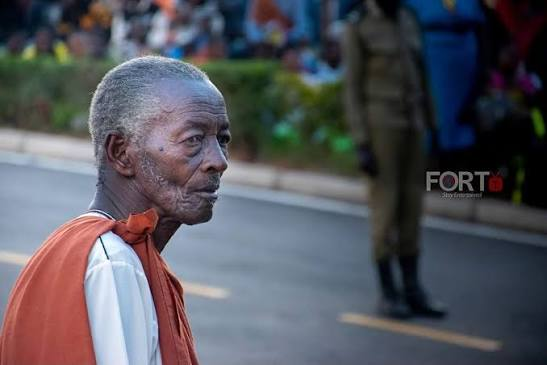
His is a much quieter office.
And perhaps because it is quieter, it is also more mysterious.
The Omusuuna operates at the boundary between the living and the dead, between the end of one reign and the beginning of another.
The Uganda Media Centre describes him as a custodian of inherited knowledge whose work includes preparing the king’s body for burial and conducting the traditional rites associated with the royal grave.
This is where Tooro culture becomes particularly fascinating.
The death of the king does not simply mean that a person has died.
It means that the institution of kingship itself has entered a temporary state of suspension.
According to the Uganda Media Centre, royal drums, stools, spears and other symbols of authority are placed upside down to signify that the reigning monarch has died and the throne is temporarily vacant.
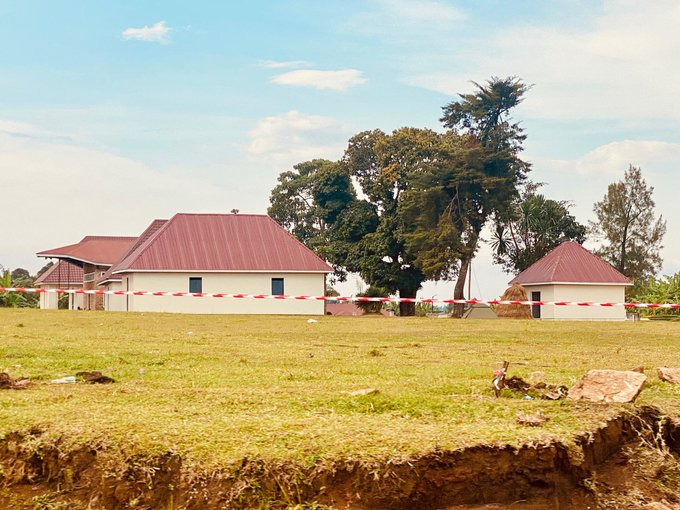
The king’s burial at Karambi Royal Tombs, known traditionally as Amagasani, therefore becomes more than a funeral.
It is a political-cultural punctuation mark.
One reign ends.
Another waits.
The Omusuuna rules over the sacred, silent, and highly confidential spiritual ceremonies of the palace.
The Last Journey: Upon the passing of an Omukama, the Omusuuna is among the very first people permitted to receive and care for the King’s physical remains (Omuguta). He supervises the sacred washing and dressing of the late king.
The Guardian of the Tombs: During royal burials, he leads the procession into the sacred royal burial houses (Gasani).
Secret Interments: He executes rituals hidden from the public eye—such as dropping nine traditional coffee beans into the grave area to symbolise the spiritual passing of authority to the next King-in-waiting.
The nine beans
And then comes one of the most intriguing details in Tooro royal tradition: nine coffee beans.
According to the Uganda Media Centre, the placing of nine coffee beans forms part of the traditional burial rites of a Tooro king. The ritual signifies that the king has been formally laid to rest and that his reign has been culturally and legally brought to an end.
The ritual has another layer.
The same source says that the appointed prince or heir traditionally performs this act; because the identity of the successor may be kept secret during the mourning period, the person who performs the ritual can effectively reveal who the next Omukama is.
Think about the symbolism.
In an age when governments announce appointments on television, presidents communicate through X, and succession battles are litigated through lawyers and press conferences, Tooro can still allow nine coffee beans in a grave to carry information about the future of a kingdom.
Why coffee?
Why nine?
Why must the public learn through ritual rather than announcement?
And what does this tell us about the different ways societies store knowledge?
Modernity tends to assume that information exists only when it is written down, digitised, broadcast or legally certified.
Traditional societies knew another form of archive: the body, the ritual, the object, the word and the person entrusted to remember.
The Omusuuna is one such archive.
Two men, two thresholds
This is perhaps why Omusuuga and Omusuuna have become such powerful catchwords at precisely this moment.
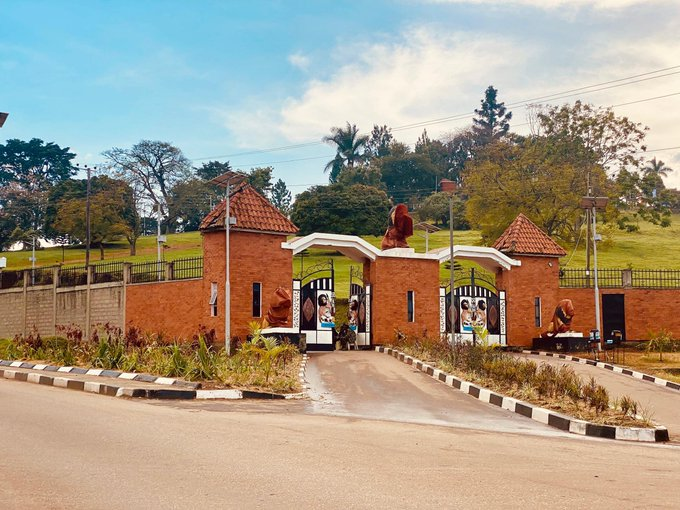
They represent two different thresholds.
Omusuuga stands between the royal clan and the throne.
Omusuuna stands between the dead king and the world of the living.
One deals with continuity of kingship.
The other deals with the completion of a reign.
And both reveal something that Uganda’s modern political vocabulary often hides: African institutions were not empty ceremonies waiting for European political systems to give them meaning.
They had systems of authority.
They had custodians.
They had succession rules.
They had sacred spaces.
They had archives.
They had specialists.
They had mechanisms for transferring knowledge from one generation to another.
Tooro’s royal traditions even extend into its clan system. The Tooro Kingdom says it recognises about 70 clans under its 1999 constitution, with clans traditionally associated with totems — animals or natural figures representing related groups.
The culture is therefore not simply about a king.
It is about an entire social architecture.
Together with the Omuhikirwa (the Prime Minister, who manages the kingdom’s secular politics), the Omusuuga and Omusuuna form the foundational tripod that sustains the leadership and cultural identity of the Tooro Kingdom.
Why are Ugandans suddenly interested?
Perhaps because King Oyo’s death has forced Uganda to look at something it normally treats as background scenery.
For three decades, Oyo himself was the most visible face of Tooro. He became king at only three years old in 1995 and later entered adulthood as a monarch who promoted education, youth empowerment, health and conservation. His death at 34 suddenly exposed the machinery behind the throne.
Then came the succession dispute.
The Babiito clan, under the Omusuuga, announced Prince Edward Rukidi Kijanangoma as the next monarch, while members of Oyo’s immediate family challenged that process, arguing that the late king had left a will naming a biological son as heir.
The argument has transformed words that once belonged largely to Tooro’s cultural vocabulary into national political language.
Omusuuga. Omusuuna. Babiito. Karambi. Iziba. Empaako.
Suddenly, millions of Ugandans are asking what these words mean.
And perhaps that is the unexpected consequence of Oyo’s death.
A king has disappeared; an entire cultural vocabulary has surfaced.
The question now is whether we will merely learn the words because they are trending — or whether we will begin asking the more difficult question:
What other African institutions have we dismissed as superstition, ceremony or “culture” without ever taking the trouble to understand the knowledge systems hidden inside them?

