



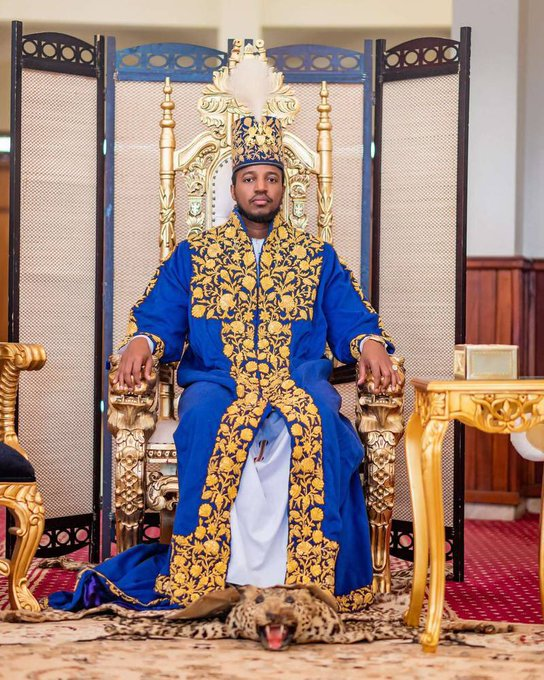
FORT PORTAL — He became king before he was old enough to understand what a kingdom was.
At three years old, Oyo Nyimba Kabamba Iguru Rukidi IV inherited the throne of Tooro following the death of his father in 1995. For more than three decades, his name and the ancient institution he represented grew together.
On Thursday night, that extraordinary story came to an end.
King Oyo died at about 10:00 p.m. on August 27, 2026, at the age of 34, the Tooro Kingdom announced, sending a wave of grief through the kingdom and across Uganda.
“It is with profound sadness and a heavy heart that I announce the passing of His Majesty the Omukama of Tooro, King Oyo Nyimba Kabamba Iguru Rukidi IV, at approximately 10:00 p.m. this evening,” Tooro Prime Minister Calvin Armstrong Rwomiire Akiiki said.
“This is an immeasurable loss to the Royal Family, the people of Tooro and the nation of Uganda.”
The announcement followed hours of uncertainty over the King’s health.
Earlier in the day, the Kingdom had confirmed that Oyo was in a critical condition and asked the public to pray for him while warning against speculation and unverified reports.
By nightfall, the prayers had become mourning.
“Omukama Atulize. Enkuba Etutire,” the Kingdom said in announcing his death.
The Kingdom has not publicly disclosed the cause of death. Oyo had been receiving treatment in the United States, according to reports, but details surrounding his illness and final hours have not been released.
The Prime Minister called on the people of Tooro to remain calm and united, while offering an immediate reassurance about the future of the institution.
“The continuity of the Crown is assured,” Rwomiire said.
He revealed that Oyo leaves behind a Prince who will be heir to the throne, although the identity of the Prince will be formally announced at the appropriate time in accordance with the traditions and customs of Tooro.
Funeral and mourning arrangements are expected to be communicated separately.
The boy who inherited a kingdom
Oyo was born on April 16, 1992, to King Patrick Matthew Kaboyo Olimi III and Queen Mother Best Kemigisa.
Three years later, his father died.
The child was placed on a throne that was centuries older than him.
He was crowned Omukama of Tooro on September 12, 1995, becoming one of the world’s youngest reigning monarchs. He was still a toddler; the responsibilities of the kingdom were therefore exercised through a regency as he grew up.
For many Ugandans, Oyo was not simply a king they read about in history books. They watched him grow.
The boy in the royal photographs became a teenager. The teenager became a young man. Eventually, the child monarch became the adult Omukama.
When he turned 18 in 2010, he formally assumed greater responsibility for the affairs of the kingdom.
His life was therefore inseparable from the evolution of modern Tooro.
He inherited a traditional institution at a time when Uganda was changing rapidly. The kingdom had been restored as a cultural institution after the abolition of traditional monarchies in 1967, and Oyo’s reign became part of a wider revival of cultural identity in a country negotiating the uneasy relationship between modern statehood and older kingdoms.
That is perhaps the paradox of Oyo’s reign.
He was born into an ancient institution, yet he lived almost entirely in the modern world.
A king, but not a politician
The Omukama does not govern Uganda in the political sense. Uganda’s elected government exercises state authority.
But kings and cultural institutions occupy a different territory.
They carry memory.
They carry ancestry.
They give communities a language through which to speak about themselves beyond elections, governments and administrative boundaries.
For Tooro, Oyo became the face of that memory.
His reign lasted more than 30 years — virtually his entire conscious life.
His death therefore leaves more than a vacant throne. It leaves a generation of people who never knew Tooro without King Oyo.
From prayers to mourning
The circumstances of his death have also exposed the strange speed of information in the social-media age.
The Kingdom was forced to address reports about Oyo’s health before confirming that he was critically ill. The public was repeatedly asked to avoid rumours.
Then came the official announcement.
The distance between uncertainty and mourning was only hours.
Among those expressing grief were political leaders, cultural figures and ordinary Ugandans who had followed the King’s life since childhood.
The loss is particularly poignant because Oyo himself was only 34.
He had spent more than 30 years as King.
Few people ever have the opportunity to become an adult. Fewer still become an adult while carrying an inherited crown.
Oyo did both at the same time.
The crown continues
The immediate question for Tooro is succession.
The Prime Minister’s announcement that a Prince exists and will inherit the crown is meant to reassure the kingdom that the institution will survive its young King’s death.
“The continuity of the Crown is assured,” Rwomiire repeated.
But succession will be only one part of the story.
There will also be mourning; remembrance; questions about the legacy of a reign that began with a three-year-old child and ended with a 34-year-old man.
What does it mean to spend virtually an entire life as a symbol of a people?
What does a kingdom lose when the person who has embodied it for three decades disappears?
And perhaps the most unsettling question: what kind of childhood belongs to a boy who is crowned king before he has even had the chance to choose who he wants to become?
Tooro will now begin answering those questions without Oyo.
The child king is gone.
The crown remains.

