



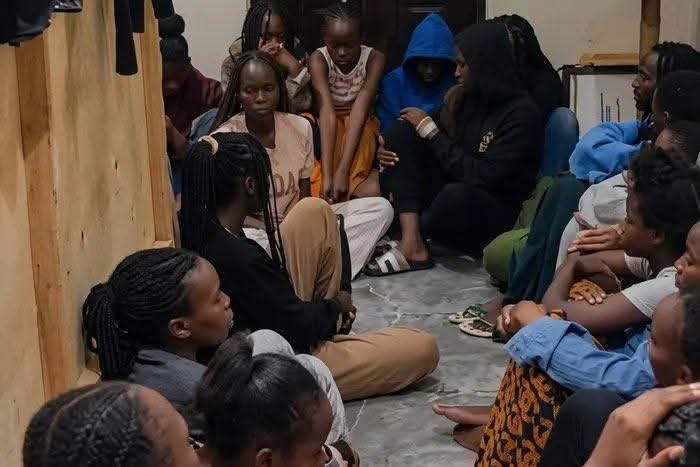
KAMPALA — Police have rescued 27 young women from what investigators describe as an online sex exploitation and adult-content streaming operation that was being run from a residential house in Kyaliwajjala, Wakiso District, sparking renewed concerns about human trafficking, cyber exploitation and the vulnerability of unemployed youth.
The operation was uncovered on the night of May 18 after detectives from the Directorate of Crime Intelligence and Kira Division Police raided a heavily guarded house in Mbalwa-Buyinja Zone, Namugongo Division, following weeks of intelligence gathering.
Officers found 27 women aged between 17 and 26 years living in cramped rooms allegedly used as makeshift studios for streaming explicit content to foreign clients.
Police recovered laptops, cameras and other equipment believed to have been used in the production and transmission of online adult content. Investigators are also pursuing several suspected organisers, including former Obsessions dance group manager Ronnie Mulindwa, who is reported to be on the run.
Kampala Metropolitan Police spokesperson Rachael Kawala confirmed the operation and said investigations are focusing on possible human trafficking and sexual exploitation offences.
“During the operation, officers found 27 females residing in three rooms, together with various gadgets allegedly used for online adult content activities,” Kawala said.
She added that police efforts to identify and arrest the suspected recruiters and organisers are continuing.
Promises of Easy Money
According to preliminary findings, many of the young women were recruited from different parts of Uganda, including Kampala, Wakiso, Mukono, Masaka, Lyantonde and Busoga, after being promised lucrative earnings. Once recruited, some were reportedly assigned new identities to conceal their real names and prevent recognition by family members and acquaintances.


One of the rescued women told investigators that the environment exposed participants to numerous risks, including sexual relationships with colleagues and trainers.
“In our online sex work, our colleagues become obsessed with us and start sleeping with us, while our coaches also end up doing the same. I am now on Antiretrovirals [ARVs], but I cannot trace who infected me,” she said.
The testimony highlights the health and social consequences associated with exploitation networks that often operate behind closed doors while targeting clients abroad.
According to investigators, the content was allegedly geo-blocked from Uganda and neighbouring countries to avoid detection while serving customers in Western markets.
Growing Concern Over Online Exploitation
The case has reignited debate about the intersection of poverty, unemployment and digital exploitation.
Human rights advocates and anti-trafficking campaigners have repeatedly warned that young women facing economic hardship are increasingly vulnerable to recruiters who promise jobs in entertainment, hospitality or online work but instead draw them into exploitative activities.
Police say the Kyaliwajjala operation may represent only one part of a broader network operating within the Kampala metropolitan area and beyond. Investigators are now tracing financial transactions, recruitment channels and online platforms linked to the racket.
As the investigation continues, authorities have urged the public to report suspicious activities, especially heavily guarded residences suspected of hosting illegal operations.
The rescued women remain under police custody and support services as statements are recorded and efforts continue to determine whether they were victims of trafficking, coercion or other forms of exploitation.

