



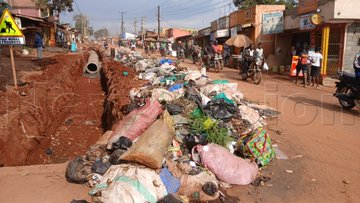
KAMPALA — Two days after Uganda launched its inaugural National Cleaning Day, heaps of garbage collected by volunteers remain piled along roadsides in several parts of Kampala, highlighting persistent challenges in waste collection, transportation and disposal in the capital city.
The cleaning exercise, launched as part of a nationwide campaign to promote cleanliness and environmental responsibility, saw residents, government officials, institutions and private organisations participate in clearing public spaces across Kampala’s five divisions — Central, Kawempe, Makindye, Nakawa and Rubaga.
However, while volunteers cleared streets, markets and drainage channels, some of the collected waste was left unattended along roadsides, creating fresh concerns about whether the city has adequate systems to handle the increased volumes of garbage generated during such initiatives.
Residents and local leaders have questioned why waste collected during the exercise was not immediately transported to designated disposal sites, warning that abandoned piles could become health hazards and undermine the purpose of the cleaning campaign.
The challenge comes as Kampala continues to grapple with rising waste generation, limited collection capacity and pressure on existing disposal infrastructure.
According to the Kampala Capital City Authority (KCCA), Kampala generates thousands of tonnes of solid waste daily, with only part of it reaching approved disposal facilities. The authority has repeatedly identified inadequate waste collection coverage, illegal dumping and limited resources as major obstacles to maintaining a clean city.
The launch of National Cleaning Day was announced by government as part of efforts to restore a culture of cleanliness across the country. Prime Minister Robinah Nabbanja previously said the initiative would involve regular community participation in keeping public spaces clean.
During the launch, authorities urged citizens to view cleanliness as a shared responsibility rather than a task left only to government agencies.
However, environmental experts argue that public cleaning campaigns must be supported by reliable waste management systems, including timely collection, transportation and proper disposal.
“The issue is not only about collecting garbage; it is about what happens after collection,” environmental advocates have repeatedly noted, stressing that sustainable waste management requires investment in infrastructure and enforcement against illegal dumping.
Kampala’s waste management challenges have been worsened by rapid urban growth, increased consumption and pressure on the city’s existing landfill infrastructure. The city’s main disposal site at Kiteezi has for years faced concerns over capacity, safety and environmental impact.
The abandoned garbage heaps following National Cleaning Day have renewed calls for authorities to develop a clear post-clean-up strategy to ensure that community efforts translate into lasting improvements in urban sanitation.
As Uganda expands initiatives encouraging citizen participation in public cleanliness, observers say the success of such campaigns will depend on whether government agencies can match volunteer efforts with efficient waste collection and disposal systems.

