



KAMPALA — Parliament’s Criminal Investigations Department (CID) has arrested two public officials following questioning over the pricing and implementation of Uganda’s digital number plate system.
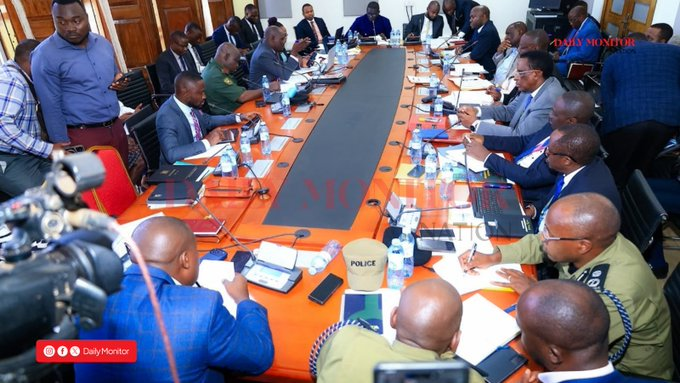
The arrests followed hearings by the Parliamentary Committee on Physical Infrastructure, which is investigating the cost, security features and implementation of the Intelligent Transport Monitoring System (ITMS).
Finance Ministry official Moses Bekabye was arrested after giving conflicting accounts about alleged benchmarking trips used to determine the price of digital number plates.
Bekabye reportedly told the committee last week that officials had travelled to China, Russia and India to benchmark digital number plate prices. During a subsequent appearance before the committee, he admitted that the trips had not taken place.
The conflicting accounts prompted the committee to refer him to Parliament’s CID for investigation on allegations of perjury.
Nathan Negesa, a public officer attached to the Office of the President, was also arrested after he failed to provide a clear breakdown of the Shs714,300 charged for a digital number plate.
According to information presented to the committee, the available cost breakdown totalled Shs624,000, leaving Shs90,300 that officials could not immediately account for.
The committee has been examining whether the cost of the plates is justified by the technology and security services attached to them.
The inquiry has also focused on the performance of the digital number plate system, including its ability to track vehicles.
However, the committee’s concerns about the tracking function have since been partly addressed. On October 2, MPs visited the Police Command Centre in Naguru and conducted a practical test using vehicles fitted with digital number plates. Police successfully located the vehicles and displayed their live positions.
Security Minister Jim Muhwezi had earlier told the committee that the system was operational and that police had used it to track and recover stolen vehicles. Parliament reported that Muhwezi said the system had helped recover 90 percent of stolen cars in cases where digital plates were involved.
The verification, however, has not ended questions about the cost of the system.
The Uganda Manufacturers Association has told the committee that the foreign company’s monopoly over digital number plate production has contributed to delays and higher costs.
In 2021, government signed a 10-year agreement with Joint Stock Company Global Security, a Russian-based company, as the sole manufacturer of digital number plates in Uganda.
The committee has also received complaints from motorists and motorcycle riders about delays in obtaining the plates and the increase in charges from the previous number plate fees to more than Shs700,000.
Committee Chairperson Mwine Mpaka said lawmakers were investigating whether the security component of the system justified the cost imposed on motorists.
The contractor has defended its capacity to produce and install the plates, saying it has the technical capability to carry out up to 1,500 installations a day.
The parliamentary inquiry is continuing, with the committee expected to examine the pricing structure, contractual arrangements, production capacity and the overall implementation of the digital number plate project.
The arrests of Bekabye and Negesa do not amount to a finding of guilt, and investigations into the circumstances surrounding their statements and the unexplained amount are ongoing.

