



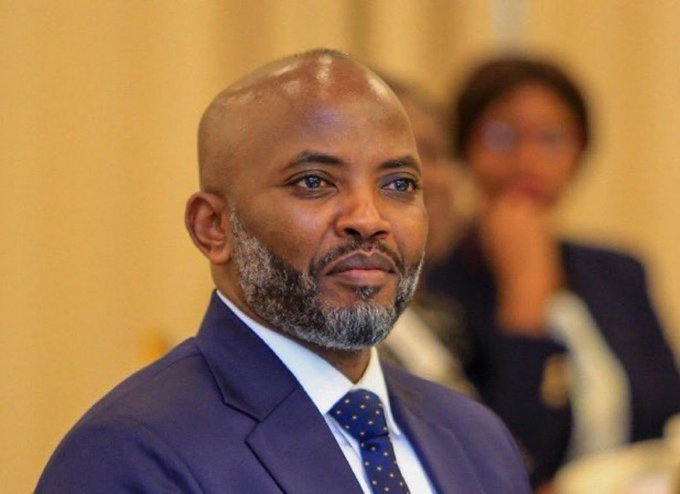
KAMPALA — Parliament’s Appointments Committee has rejected the appointment of Dr Lawrence Muganga as State Minister for Internal Affairs after members reportedly raised concerns over his citizenship status and eligibility to hold a sensitive government office under Ugandan law.
Sources familiar with the closed-door vetting proceedings said the committee questioned Muganga extensively over allegations that he holds multiple citizenships linked to Uganda, Canada and Rwanda.
During the session, Muganga reportedly told legislators that he no longer held Rwandan citizenship, explaining that he renounced it after acquiring Canadian nationality.
However, committee members are said to have demanded documentary proof and further clarification regarding his current citizenship status and whether he was willing to formally renounce any remaining foreign nationality.
According to parliamentary sources, the committee remained unconvinced by his responses and subsequently declined to approve his nomination.
The development marks one of the most contentious moments in the ongoing vetting of President Museveni’s ministerial appointees, with Muganga’s case reigniting national debate over dual citizenship and eligibility for public office.
Why the matter became controversial
The Ministry of Internal Affairs is considered one of Uganda’s most sensitive government institutions because it oversees immigration, citizenship administration, national identification systems, border management and internal security coordination.
Critics who opposed Muganga’s appointment argued that an individual serving in such a ministry should demonstrate exclusive allegiance to Uganda, especially given the ministry’s direct involvement in citizenship and national security matters.
Before the vetting, a petition challenging Muganga’s eligibility had reportedly been submitted to Parliament, citing provisions of the Uganda Citizenship and Immigration Control (Amendment) Act, 2009, which bars dual citizens from occupying certain offices of state unless they formally renounce foreign citizenship.
The matter became even more politically sensitive because of Uganda’s past diplomatic tensions with Rwanda, where Muganga previously worked before relocating to Canada.
Muganga defends himself
Following the vetting session, Muganga defended his patriotism and dismissed suggestions that his foreign citizenship status made him less committed to Uganda.
“I am Ugandan. Uganda is my country,” he reportedly told journalists after appearing before the committee.
He also argued that many Ugandans in the diaspora acquire foreign citizenship for professional and economic opportunities and should not automatically be viewed with suspicion when they return to serve their country.
Who is Lawrence Muganga?
Dr Lawrence Muganga is a prominent education reform advocate, author and academic administrator currently serving as Vice Chancellor of Victoria University in Kampala.
He has built a public profile around promoting digital transformation in education and modern teaching methods. Muganga previously worked with institutions in Rwanda and Canada, including the Rwanda Revenue Authority and the Government of Alberta in Canada.
He is also known for his book You Can’t Make Fish Climb Trees, which advocates reforms in Africa’s education systems.
In 2021, Muganga briefly attracted national attention after he was arrested during a period of strained Uganda-Rwanda relations over immigration-related allegations, though he was later released without criminal charges.
Political and legal implications
The rejection now leaves uncertainty over who will eventually assume the State Minister for Internal Affairs portfolio.
Under Uganda’s parliamentary approval system, the Appointments Committee submits its recommendations after vetting presidential nominees. The President may decide to withdraw the nominee, reconsider the appointment, or nominate another candidate.
The incident has also revived wider public discussion about the role of Ugandans in the diaspora, the legal limits of dual citizenship, and whether foreign nationality should disqualify highly skilled professionals from serving in government.
Political analysts say the case could influence future appointments as scrutiny over citizenship and allegiance intensifies within Parliament and the public.

