



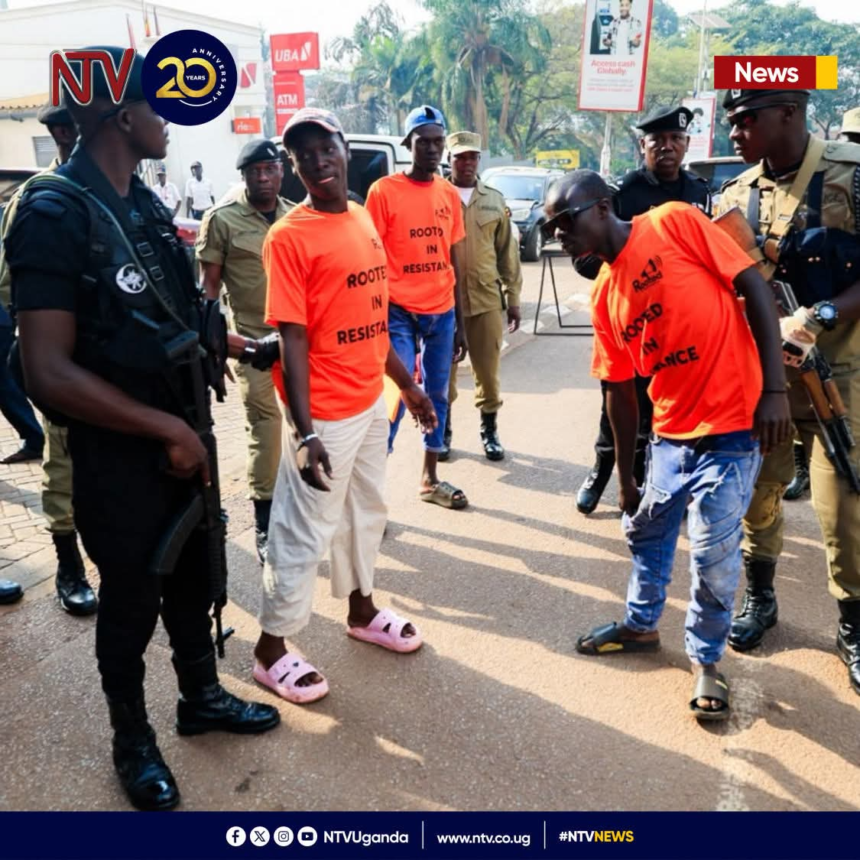
Uganda Police on Monday arrested four youth activists from Rooted in Resistance as they marched towards Parliament to deliver a petition protesting the East African Crude Oil Pipeline (EACOP).
The activists were intercepted in Kampala while carrying out a demonstration calling for an economic model that prioritises economic freedom, broad-based prosperity and greater public benefit from Uganda’s oil resources.
The arrests were reported by local media, with Daily Monitor reporting that police intercepted the group as it headed to Parliament. Police had not immediately provided details on the identities of those arrested or the specific charges against them at the time of reporting.
The protest comes as the 1,443-kilometre EACOP, which will transport crude oil from Uganda’s oil fields in Hoima to the Tanzanian port of Tanga, approaches completion.
Government officials have said construction has reached about 91 percent, with first oil expected before the end of 2026.
The activists’ campaign is not limited to opposition to the pipeline itself. Rooted in Resistance has also called for changes in how Uganda manages and benefits from its natural resources, including greater public participation in decisions surrounding the country’s oil wealth.
The latest arrests are part of a continuing confrontation between Ugandan authorities and anti-EACOP activists.
In April, Police arrested six members of Rooted in Resistance after they went to the TotalEnergies offices in Kampala to submit a petition opposing EACOP. Police said at the time that the youths were mobilising for activities likely to incite violence and disrupt public order.
Eight other activists associated with the group were sentenced in April to 11 months in prison after the Buganda Road Chief Magistrate’s Court convicted them of public nuisance arising from a 2025 anti-EACOP demonstration. The activists had been on remand since August 2025.
The legality of detaining anti-EACOP protesters has also come under judicial scrutiny. In May, the High Court ordered the government to pay Shs10 million each to four activists who had been detained for six days following their arrest during a 2022 march to the European Union offices. The court found that keeping them in custody beyond the constitutional 48-hour limit violated their right to personal liberty.
In another ruling, the High Court ordered the government to compensate three Rooted in Resistance activists who were detained for more than 48 hours following a 2023 protest near Parliament.
The repeated protests have therefore placed the EACOP project at the intersection of Uganda’s oil ambitions, environmental concerns and debates over the constitutional rights to peaceful assembly and expression.
For the activists, the demonstrations are intended to challenge what they see as an economic model that risks leaving ordinary Ugandans without sufficient benefits from the country’s petroleum resources.
For government and security agencies, protests around major infrastructure projects must be conducted within the law and without disrupting public order.
The latest arrests are likely to renew that debate as Uganda moves closer to commercial oil production.

